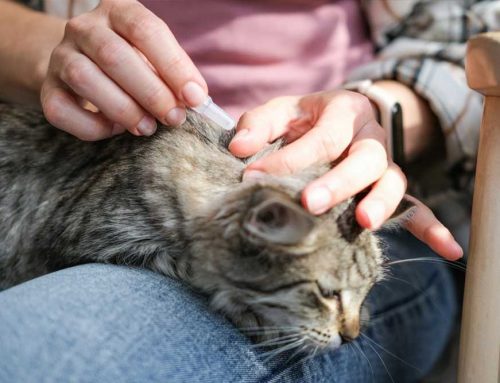


Introducing a new pet the right way comes down to going slower than feels necessary. Separate space first, then scent swapping and short looks at each other through a door or baby gate, then brief supervised meetings, with more freedom only once both animals stay relaxed. Rushing that sequence is what turns a good match into a house where one pet hides and the other guards the food bowl. Plan on days to weeks rather than one big first meeting, and expect a few backward steps along the way.
The first weeks go more smoothly when you know your new pet is healthy, because parasites, a brewing infection, or pain can look a lot like a behavior problem between two animals. Valley Center Veterinary Clinic checks your new dog or cat for anything that could pass to the pet you already have at home, and starts vaccines and parasite prevention before everyone is sharing a water bowl. We are an AAHA-accredited hospital, and we walk you through our reasoning instead of handing you a list, so you know what your new pet needs and why while the household is still settling. Once they are home, start with an exam and we will build around what your pet actually needs.
What a Slow Introduction Looks Like
- Most introductions take days to weeks, and cat-to-cat and dog-to-cat pairings usually need the longest runway.
- End every session while both pets are still relaxed, and keep them separated any time you can't supervise.
- Separate bowls, litter boxes, beds, and chews prevent most of the conflicts families worry about, because competition is what starts them.
- The newcomer's exam protects the pet you already have, since parasites and infections travel easily between animals sharing a house.
How Should You Set Up Your Home Before the New Pet Comes Through the Door?
The new pet needs a room of their own before anyone meets, and the house needs a hazard sweep first. A new animal will find the dangling cord, the unlatched cabinet, and the lily on the side table before you do, which is why pet-proofing your home belongs on the calendar days before the carrier comes through the door.
Separate zones do the heavy lifting in week one. The newcomer gets one room with their own food, water, bed, litter box or crate, and a door that closes, while the resident pet keeps the rest of the house exactly as it was. That room isn't punishment. It's the only place either animal can fully relax while they get used to hearing and smelling each other, and it gives them somewhere to retreat on the days that go badly.
Vertical perches, covered hiding spots, and litter boxes set well away from food and water bowls are the backbone of a cat-friendly environment, and every one of those resources matters twice as much once a second animal shares the square footage. Dogs need the same thinking in a different shape: a crate or gated corner that belongs to one dog only, plus enough beds that nobody has to negotiate for a nap spot.
A first wellness visit clears the problems that imitate bad behavior before the newcomer has the run of the house. Fecal testing and feline retrovirus screening mean you aren't guessing about what your resident pet is being exposed to.
How Does a Young Puppy or Kitten Change the Introduction?
A young puppy or kitten changes the introduction mostly by needing shorter sessions and closer supervision than an adult newcomer would. The window for socialization is brief, roughly three to fourteen weeks in puppies and two to seven weeks in kittens, and whatever your resident pet teaches during it tends to stick. A hard correction from an annoyed older dog lands differently on a baby than on an adult.
Aim for short, boring, frequent meetings. A couple of calm minutes through a baby gate, ended while the puppy is still loose and wagging, builds more than a long nose-to-nose session that finishes with a correction. Keep treats handy for the resident pet too, since the newcomer should predict good things for both of them. Young pets haven’t had enough life experience to know what body language means from an adult, so be prepared to supervise and intervene early when you notice that one of them has had enough.
The young one will tell you when to stop. Back off at any of these:
- A puppy who freezes, tucks their tail, yawns repeatedly, or turns away
- A kitten with flattened ears, a low crouch, a twitching tail, or a dash under the couch
- A resident pet who leaves the room and doesn't come back, growls, snaps, raises their hackles, or has a hard, frozen stare toward the new pet
A carrier left open as ordinary living room furniture, short handling sessions, and play aimed at toys rather than hands are part of setting a kitten up for success, and all three matter more once another animal shares the house.
First-year puppy care times vaccines and parasite prevention around that window, when a young dog needs to meet the world before full protection kicks in. Our kitten wellness packages do the same on the feline side.
How Do You Introduce Two Dogs Without It Going Sideways?
Two dogs do best meeting somewhere neither one lives. Neutral ground, loose leashes, and a parallel walk before any nose-to-nose contact are the whole foundation of dog-to-dog introductions, because a first meeting inside the resident dog's own living room starts the relationship on defensive footing.
That walk is simple: two handlers, two leashes, both dogs moving the same direction on opposite sides of the sidewalk, far enough apart that neither is straining. As they loosen up, close the gap. Let them sniff for three seconds, call them away, keep moving. Ending an interaction while it's still going well is the most useful habit in the whole process.
Not every dog wants a roommate, and dog tolerance tends to narrow with maturity, so the six-year-old who handles the dog park fine may still want nothing to do with a bouncing puppy who lives in her house. That isn't failure. It means more management, more separate downtime, and a slower ramp.
| What you see | What it means | What to do |
| Loose wiggly body, curved approach, soft eyes | Comfortable | Continue, in short sessions |
| Play bow, bouncy movement, natural pauses | Inviting play | Allow it, then call both away |
| Stiff posture, hard stare, closed mouth, high slow tail | Tension building | Add distance immediately |
| Lip curl, growl, snap at the air | A clear warning | Separate calmly, never punish the sound |
| Tucked tail, turning away, lip licking, whale eye | Frightened, not aggressive | Stop for the day, more room tomorrow |
Freedom comes in increments: leashed time together, then dragging leashes, then short off-leash stretches in one room while you're standing right there. Feed in separate rooms that whole time, and reward the quiet moments out loud, because dogs repeat what pays.
A comfortable resident dog handles a housemate better, which is part of why adult dog wellness care belongs on the list before you add one. Pain is a short fuse. An arthritic hip or a sore ear can turn a tolerant animal snappy, and from the outside that reads as a behavior problem.
What's the Right Way to Introduce a New Cat to the Cat You Already Have?
Cats need the slowest version of this. Scent comes first, sight through a cracked door or baby gate comes second, and shared space comes last, a sequence that makes introducing a new cat a project measured in weeks rather than an afternoon.
Scent swapping is the step families skip, and it's the one that does the work. Rub a soft cloth on one cat's cheeks and leave it where the other sleeps. Trade bedding. Let each cat explore the other's room while nobody else is in it. Then feed on either side of a closed door, far enough back that both keep eating, moving the bowls a few inches closer over several days. Move toward playing under the closed door: a feather slid under the gap, where paws from both cats can bat at it on either side, works well.
Visual access comes next, through a door wedged open two inches, a glass door, or a baby gate. Keep it brief, keep it pleasant, and finish before anyone settles into a stare. A pheromone diffuser in the shared space takes the edge off for some cats, and it works best alongside the plan rather than instead of it.
Most tension among cats never looks like a fight. It looks like one cat parked in a doorway, a long stare across the room, or a cat who quietly stops using the litter box she has to walk past someone to reach. The answer is resource math: one box per cat plus a spare, in different rooms, with separate feeding stations, multiple water sources, and enough perches that nobody has to share a window.
Both cats deserve their own baseline, and cat wellness exams give us that before the household changes. Stress and urinary trouble look nearly identical from across the couch, so call us if a resident cat's appetite or litter box habits shift mid-introduction. A cat who won't eat for more than a day needs to be seen, and a male cat straining in the box with little or nothing coming out is an emergency that same day.
Can a Dog and a Cat Learn to Share a House?
Most dogs and cats can share a home comfortably, and the first couple of weeks set the tone. The rule that makes introducing dogs and cats work is lopsided on purpose: the dog stays leashed and managed while the cat decides how close to come, with escape routes and high perches open at all times.
The dog's job is to be boring. Practice a sit and a settle on a mat long before the cat is anywhere nearby, so you have something to ask for when your dog locks on. Leave a light drag line attached indoors for the first weeks, because one accidental chase can undo two weeks of careful work. The engage-disengage game is perfect for this: your dog, while on a leash, gets a treat for calmly looking at the cat and then looking at you. It teaches your dog that calmly watching the cat, not chasing, gets a reward.
The cat's job is to be free. Never hold a cat during an introduction, and never carry them toward the dog. Baby gates with a cat-sized gap, a tall tree in the room, and clear routes to high shelves let her approach on her own schedule and leave the instant she wants to.
If your dog has a strong prey drive, a history of chasing small animals, or can't unlock from the cat after two weeks of practice, give us a call before repeating more of the same. Some pairings need a structured behavior plan, anti-anxiety medication, or a permanently divided home, and knowing that early is far kinder than finding out the hard way.
How Do You Prevent Fights Over Food, Beds, and Space?
Resource guarding is a pet protecting something valuable, and a new housemate tends to bring it out. Stiffening over the bowl, speeding up when someone walks by, or standing frozen over a chew are the early signals of food guarding, and the fix starts with feeding in separate rooms instead of asking two animals to learn to share.
Pick bowls up when the meal ends, stagger mealtimes by a few minutes so nobody stands over an empty dish watching someone else finish, and hand out chews only behind a closed door or not at all for now.
Guarding isn't only about dinner. Beds, doorways, a favorite person's lap, a window with a bird feeder in view: anything one animal values can become something worth defending. Give each pet a resting place the other never uses, keep enrichment going so there's more to do than monitor each other, and hold the daily rhythm steady.
Two things to avoid at home. Never punish a growl or a hiss, because that sound is information, and a pet who learns it gets them in trouble simply stops warning first. And never reach between two fighting animals or grab a collar: put a barrier between them instead, like a baby gate, a chair, or a blanket tossed over one of them, or startle them apart with a sudden loud noise, then move them to separate rooms. Most serious bites to people happen during a scuffle somebody tried to break up with their hands.
Once everyone is calm, look both pets over. Puncture wounds close fast and hide the damage underneath, and cat bites in particular tend to abscess a few days later, so a wound you can barely find still deserves an exam.
When the early signs don't settle, our veterinarians can sort the medical from the behavioral, since pain, thyroid disease, and fading vision or hearing all shorten a pet's patience.
How Long Before Everyone Settles Into the New Routine?
Most pets settle within a few weeks, and predictability is what gets them there. Feeding, walks, play, and quiet time at roughly the same hours each day lower the background anxiety that makes small disagreements bigger than they need to be. Exercise your dog before any shared time so the energy is already spent, and build in real downtime, crated or behind a door, so neither animal is on duty from morning to night.
| Timeframe | Dog + dog | Cat + cat | Dog + cat |
| Days 1 to 3 | Separate spaces, scent swapping, parallel walks outside | Newcomer stays in one room, bedding traded daily | Full separation, towel and bedding exchange |
| Days 4 to 10 | Brief leashed time indoors, ending early | Meals on either side of a closed door | Gate visuals, dog leashed and settled |
| Weeks 2 to 6 | Dragging leashes, then supervised freedom in one room | Short shared time, then wider territory | Shared rooms in small doses, cat free to leave |
| Signs to slow down | Stiffening, staring, blocking a doorway | Hiding, blocked access, litter box changes | Dog fixating, cat staying hidden or high |
Progress isn't a straight line. A great week can end with a hiss at the top of the stairs, usually because something shifted: a houseguest, a schedule change, furniture in a new spot. Back up one step, hold there a few days, then move forward again.
Worries rarely wait for business hours. After-hours telehealth is there when a new kitten starts sneezing on a Sunday or the dogs have their first real argument on a Friday night, and it'll tell you plainly whether this holds until morning.
What Families Ask Us When They're Adding a Second Pet
Should We Just Let Them Work It Out Themselves?
Letting two animals sort it out alone is the most common way an introduction goes badly. What looks like working it out is often one pet learning to avoid the other, or one learning that a snap ends the pressure fastest. Supervised, structured, uneventful meetings build a relationship; unsupervised ones build a pecking order somebody has to lose.
Does a Healthy-Looking New Pet Still Need a Checkup First?
A new dog or cat can look perfect and still carry intestinal parasites, ringworm, an upper respiratory infection, or fleas that will find your resident pet within a day. Shelters and breeders do their best, but an illness still incubating won't show on the drive home. Plan on an exam and fecal testing before shared bowls and shared bedding, and keep the newcomer separated until then.
Do Spayed and Neutered Pets Get Along Better?
Intact animals add friction that has nothing to do with the introduction itself. Hormones raise the odds of marking, mounting, and same-sex conflict between dogs, and unaltered cats spray and roam considerably more. Spaying and neutering won't repair a mismatched pairing on their own, and neither one replaces a slow, careful introduction. For most multi-pet homes, though, they remove one predictable source of tension.
Adding a Second Pet in Valley Center
Most households find their rhythm inside a few weeks, and the backward days along the way don't mean the match was wrong. What counts is catching real trouble early: a growl that becomes a snap, a cat who stops eating, a resident dog who can't relax in their own home.
Valley Center Veterinary Clinic gives you straight answers and upfront pricing, so the plan you take home is one you can actually follow. When you're ready, book a visit and we'll take a look at both pets, not just the new one.