
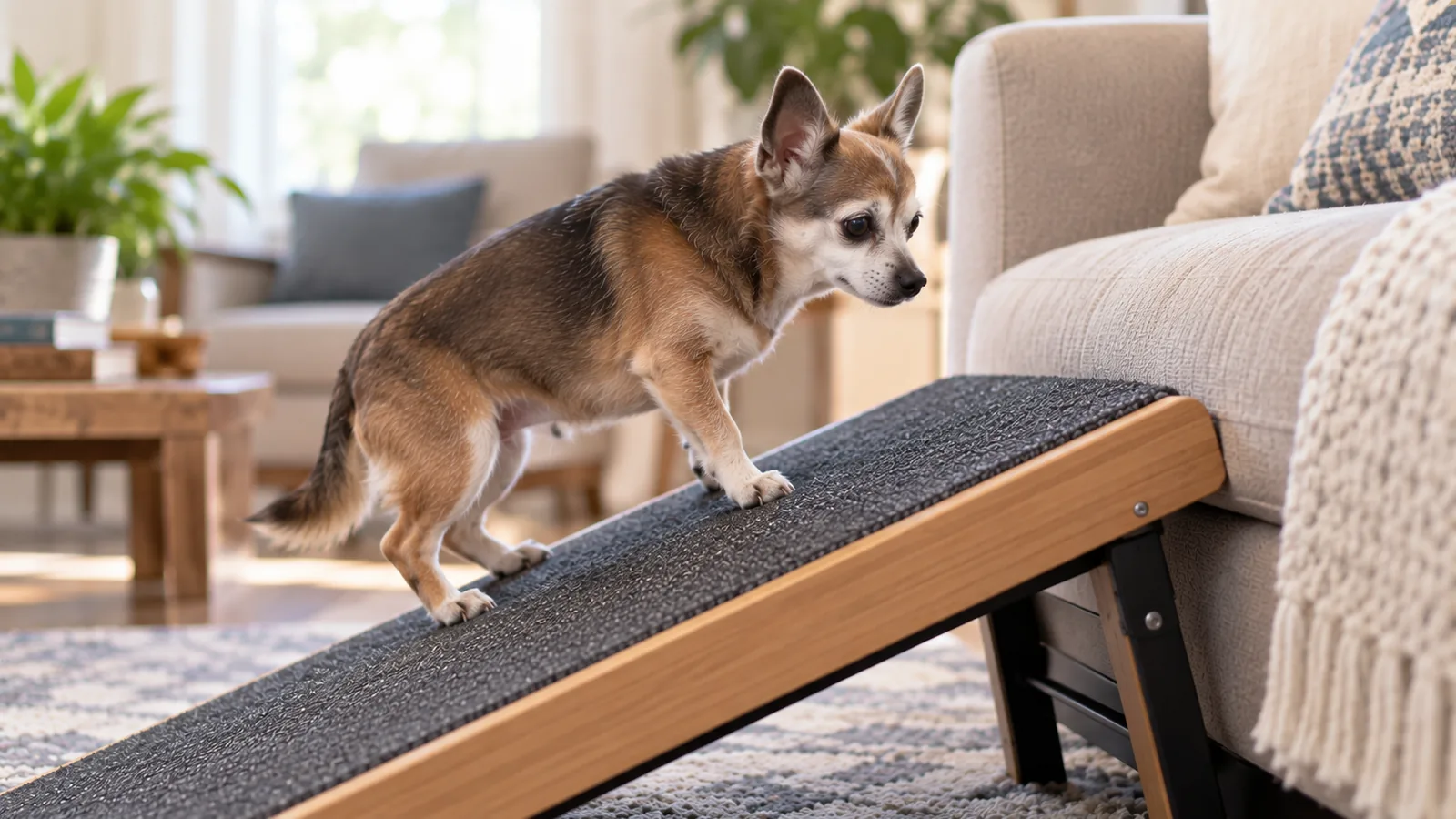
The changes that keep a senior dog or cat moving comfortably are mostly small: traction on slick floors, a ramp or step up to the couch they still want to reach, and food, water, litter, and bedding on one level so nothing requires a jump. Routine matters as much as equipment, so shorter and more frequent walks, a warm bed out of household traffic, and nail trims often enough that paws grip instead of slide. Those changes work best alongside treatment, because in dogs and cats a slowdown is usually pain doing more of the work than age. Most of what slows an older pet down can be treated or managed, and either way catching it early is what buys comfort and good years.
Valley Center Veterinary Clinic knows how hard it is to watch a pet you have had for years start moving like a different animal, and we treat that as something to solve rather than an inevitable part of aging. Our senior wellness packages are built for this stage of life, with the bloodwork, urinalysis, and imaging that turn up thyroid, kidney, or heart trouble a slowdown can hide, and we explain the reasoning behind every recommendation so the plan makes sense once you are back home. For sore joints we build the pain plan around your pet's real day, which can include medication, weight and nutrition support, and cold laser therapy. If your dog or cat is not getting around the way they used to, book a senior exam at our AAHA-accredited hospital and tell us what you have been noticing at home.
What Changes First in a Senior Pet's House
- The biggest wins are boring ones: rugs on slick floors, a ramp or low step to the couch, and food, water, litter, and bedding all on one floor.
- When a senior dog or cat slows down, pain or disease is usually driving it, not the birthday. Both are easier to treat early.
- Twice-yearly bloodwork, urine testing, and imaging pick up kidney, liver, and thyroid changes months before your pet looks unwell.
- Comfort is a plan, not a product: pain control, muscle and weight support, a house built for stiff joints, and a routine your pet can predict.
What Happens at a Senior Exam When Your Dog or Cat Starts Slowing Down?
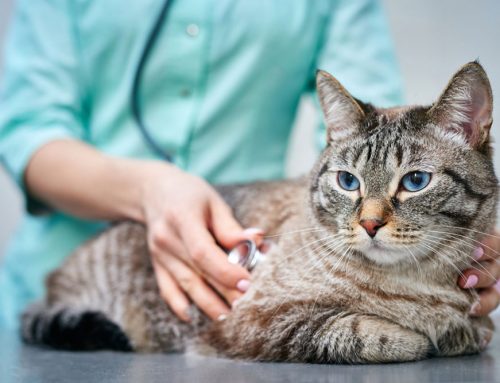
A senior exam starts with what you've noticed at home: the pause before the couch, the third trip to the water bowl. Those notes steer everything we check afterward. Then we go hands-on through joints, muscle along the spine, teeth, and body condition, and most visits add bloodwork, a urine sample, and X-rays when a joint or the back needs a closer look.
Why two visits a year? Preventive testing for seniors picks up kidney, liver, and thyroid shifts months before there's anything to see at home. An eleven-year-old needs that second look, where a three-year-old didn't.
Our comprehensive lab work and digital imaging can sort out your pet’s symptoms and often catch senior health problems before you’ve even noticed a change. One set of numbers is a snapshot. Three sets across a couple of years draw a line, and the line tells us whether a creeping kidney value needs a diet change now.
Some changes can't wait for the next scheduled visit. Labored breathing, collapse, repeated vomiting, sudden weakness in the hind end, or a cat straining in the box with nothing to show for it all need to be seen right away, and we handle urgent care during our open hours, with walk-in emergencies welcome when staffing allows.
Is It Just Age, or Is Something Hurting?
Age by itself rarely causes stiffness or slowing down in a dog or cat, while pain and joint degeneration does. Most common pain signs are easy to miss in their early stages because pets instinctively hide their symptoms.
For a dog, watch the first ten minutes after a nap. A limp that works itself out in that window, a walk that fades on the way home, and trouble rising off tile are the classic set. You might see a beat of hesitation before the jump to the couch, panting while lying still, or more napping.
A cat who has given up the top of the bookshelf is telling you something quietly. A visible limp draws the wrong kind of attention in the open, and that instinct doesn't switch off indoors. What you see instead is more sleeping, lower perches, and a coat less tidy than last year. A cat who can't twist comfortably stops reaching the hips and lower back, and a matted patch there is often the first mobility sign anyone notices. Add accidents right beside the litter box, since stepping over a high side often hurts more than it’s worth.
Mention the small stuff at preventive care visits, even when it feels too minor to raise. Dental disease, arthritis, and early cognitive change all start this quietly. Here's how we sort it in the exam room:
| What you notice | Probably normal aging | Bring it to us |
| Play and mood | Shorter sessions, less interest | Hides, grumbles at a touch, or leaves when the family arrives |
| The jump to the couch | Slower than last year | Measures it, backs up for a run, or has quit |
| Eating and the scale | Steady, with small ups and downs | Weight sliding off, kibble dropping from the mouth, chewing one side |
| A cat's coat | Slightly less polished | Mats over the hips, a greasy strip down the back, one joint licked raw |
| Sleep | Longer naps, still easy to wake | Sleeps through dinner, hard to rouse, or roams after dark |
.
How Do We Manage Arthritis in Older Dogs and Cats?
Arthritis management in an older dog or cat is a stack, not a single prescription: weight control, steady activity instead of heroic bursts, and pain medication, layered and adjusted as the joint changes. Cartilage doesn't grow back once it wears away. We build the stack around your pet's real day, and we'd rather start while there is muscle and mobility left to protect.
Senior wellness visits are where the pain plan gets written down: what options are available, at what dose, and what changes when the weather turns cold. There's also a monthly injection worth asking about. It uses a monoclonal antibody to catch an arthritis pain signal before the brain receives it, comes in separate versions for dogs and cats, and suits pets whose sensitive stomach or borderline kidney values rule out a daily oral medication.
The pills most likely to hurt a senior pet are the ones already in your bathroom. Ibuprofen and naproxen cause stomach ulcers and kidney damage in dogs and cats, acetaminophen can kill a cat at an ordinary human dose, and a leftover prescription from another animal in the house isn't safe to share. Skip the human pain medications and stick with the pet-safe options we provide.
What Else Helps a Stiff Senior Besides Medication?
Besides medication, what helps a stiff senior is muscle, joint supplements, laser therapy, and a steadier daily rhythm.
- We run laser therapy sessions here for arthritic joints and soft-tissue injuries, and most patients doze through it while the light calms inflammation around the joint. Laser therapy is a great way to decrease pain, especially for pets whose symptoms aren’t well controlled on traditional medication or can’t take it due to internal organ decline.
- Joint supplements with omega fatty acids, glucosamine, chondroitin, and green-lipped muscle help to decrease inflammation and provide the nutritional building blocks needed for healthy cartilage and joint fluid. When given daily, long term, they can make a real difference for many pets. Ask our team which ones we recommend, because not all brands are created equal. We have great vet-trusted options in our online pharmacy.
- Rehabilitation for arthritis targets the muscle around the joint rather than the joint itself. Build the hindquarters back up and the sore hip has something to brace against every time your dog pushes off the floor. We create physical therapy plans here as well, folded into the pain strategy rather than run as a separate track.
Five minutes of easy walking warms stiff joints before real activity, two shorter outings beat one long one, and sniffing counts as exercise for a dog whose legs tire before the nose does. Regular movement every day helps prevent the stiffness that builds from an all-day napping session.
Where Does a Senior Pet Get Stuck at Home?
A senior pet gets stuck in three places: the slick stretch of kitchen floor, the height of the couch, and the step down to the yard. Handle those and you've covered most of what an arthritis-friendly home asks for. Footing first, then height, then how far your pet travels to reach food, water, and bed.
| Where they get stuck | The fix | What it changes |
| The step down to the yard | A threshold ramp, plus a handled harness | A trip outside doesn’t turn into a fall |
| Bedtime | A thick orthopedic bed, warm and out of the traffic | Warmth loosens joints, quiet deepens sleep |
| Tile and hardwood | Washable runners or carpet tiles on their usual routes | Sore hips push off something instead of sliding |
| The couch or the bed | A gently sloped ramp, or a padded step half the height of the jump | The landing on the way down does the damage |
| The food and water bowls | Raised dishes, plus a second water station where they nap | Less strain on neck and shoulders, more drinking |
- Cats: For a cat, the home modifications that count are a low-entry litter box, a step up to the favorite windowsill, and a warm bed at floor level. Put a water bowl and litter box on every floor they use. Requiring a flight of stairs at 3 a.m. is how a lot of tidy cats start missing the box.
- Unsteady dogs: A wobbly dog needs assistive devices more than another rug: a handled support harness, toe grips for nails that skate, and a sling for stairs. Short nails that clear the floor do as much for grip as anything you can buy.
- The routine: Meals, walks, and bedtime at the same hours steady an older brain. In summer, shift outings to the cool end of the day, since the ground out here holds heat well past dinner.
Not sure what to change first? Reach out to our team and we’re happy to make recommendations for the right changes that might help your pet.
What Should a Senior Dog or Cat Be Eating Now?
A senior dog or cat should be eating high, digestible protein with calories matched to the animal in front of you rather than the age bracket on the bag. Senior nutrition is about the individual, not the label. Older cats need the same attention, because they digest protein and fat less efficiently each year.
A pet whose weight holds steady while muscle melts off the spine and hips isn't doing well, and the scale alone won't tell you. We run our hands down the backbone at every visit. Do the same at home: ribs easy to feel under a thin layer, a waist visible from above, and hip muscle that feels firm rather than scooped out.
Extra weight is the heaviest thing a sore joint carries, and taking a little off does more for mobility than most bottles on the shelf. Loss in the other direction deserves the same speed. Say your cat has slipped a single pound since last year. For a small cat that's a tenth of the body, and it points toward kidney disease, an overactive thyroid, or diabetes more often than a pickier appetite. Every senior wellness visit includes a weight check, muscle evaluation, and discussion about what they’re eating.
Why Is My Dog Pacing and My Cat Calling Out at 3 a.m.?
A dog pacing the living room at 3 a.m. and a cat calling down an empty hallway are usually showing you cognitive dysfunction, the dog and cat version of dementia. It arrives one strange night at a time, with the days looking mostly normal for a long while.
Other clues belong on the same list: a house-training habit held for a decade suddenly gone, staring at nothing, less interest in greeting the family, getting stuck behind furniture, or sleeping all day and roaming all night. Before we call it the brain, we rule out the impostors. Pain, an overactive thyroid in cats, and high blood pressure each produce the same restless nights.
What helps is predictability and footing. Same meal times, same lights-out, a night light along the route from bed to water bowl, and a rug down that route. Diets rich in antioxidants and medium-chain triglycerides, omega-3 supplements, and prescription medication can each slow the decline, and all are worth discussing before the nights get hard.
When you're up at 2 a.m. wondering whether this is an emergency or just a long night, our after-hours telehealth can help you decide.
How Do You Know When Comfort Should Lead the Plan?
You know comfort should lead the plan when the rough days start outnumbering the good ones, and a Quality of Life Scale gives you something steadier than one bad morning to judge by. You grade seven things: mobility, hygiene, hydration, hunger, hurt, happiness, and the balance of good days against bad. Do it weekly, or mark a calendar with a check for a good day and an X for a rough one. After a month the pattern reads clearly.
Comfort-focused care is medicine, not giving up. It can mean steady pain control, appetite and nausea support, fluids, help with hygiene, and a house arranged so a weak pet reaches what they need without asking. Those conversations go better with the veterinarians who know your pet, because we've watched their normal change over the years. There's no perfect moment, and wanting more time doesn't mean you've missed something.
Your Senior Pet Comfort Questions, Answered
When Does a Dog or Cat Count as a Senior?
A dog or cat counts as a senior at a different age depending on size: giant breeds around six, mid-size dogs around eight, small dogs closer to ten, and most cats around eleven. What matters more than the number is what changes with it: exams twice a year instead of once, baseline bloodwork and urine testing to compare against, and a conversation about joints before any limping starts.
Will a Ramp Work for a Cat, or Is That a Dog Thing?
A ramp works for some cats, though most prefer steps, because climbing is closer to what they'd do on their own. Carpeted pet stairs beside the bed or a sturdy storage cube under the windowsill both work when each rise is low and the surface grips. Introduce it while the perch is still reachable and put a treat on the first step. If you do use a ramp, make it wide, gently sloped, and non-slip.
Do Joint Supplements Really Help?
Joint supplements help some pets, and the evidence varies a lot by product. Omega-3 fatty acids from fish oil have the strongest support for arthritic dogs and cats, while green-lipped mussel and glucosamine help certain pets with little risk of harm. Supplements aren't regulated the way medications are, and a few interfere with prescriptions. Run your list by us before adding anything. They support a plan built on weight control and real pain relief.
Keeping Valley Center's Senior Pets on Their Feet
The hills around here make for good walks and hard landings, and our long dry summers keep older dogs indoors on tile, where traction matters most. Valley Center Veterinary Clinic would rather hear about the small stuff early, back when a rug, a ramp, and a pain plan still buy a long stretch of good mornings. If your dog or cat has started taking the stairs one at a time, book a senior visit and bring the list of what you've been noticing. If you'd rather talk it over first, reach out to us and we'll help you sort out what's worth an appointment.