
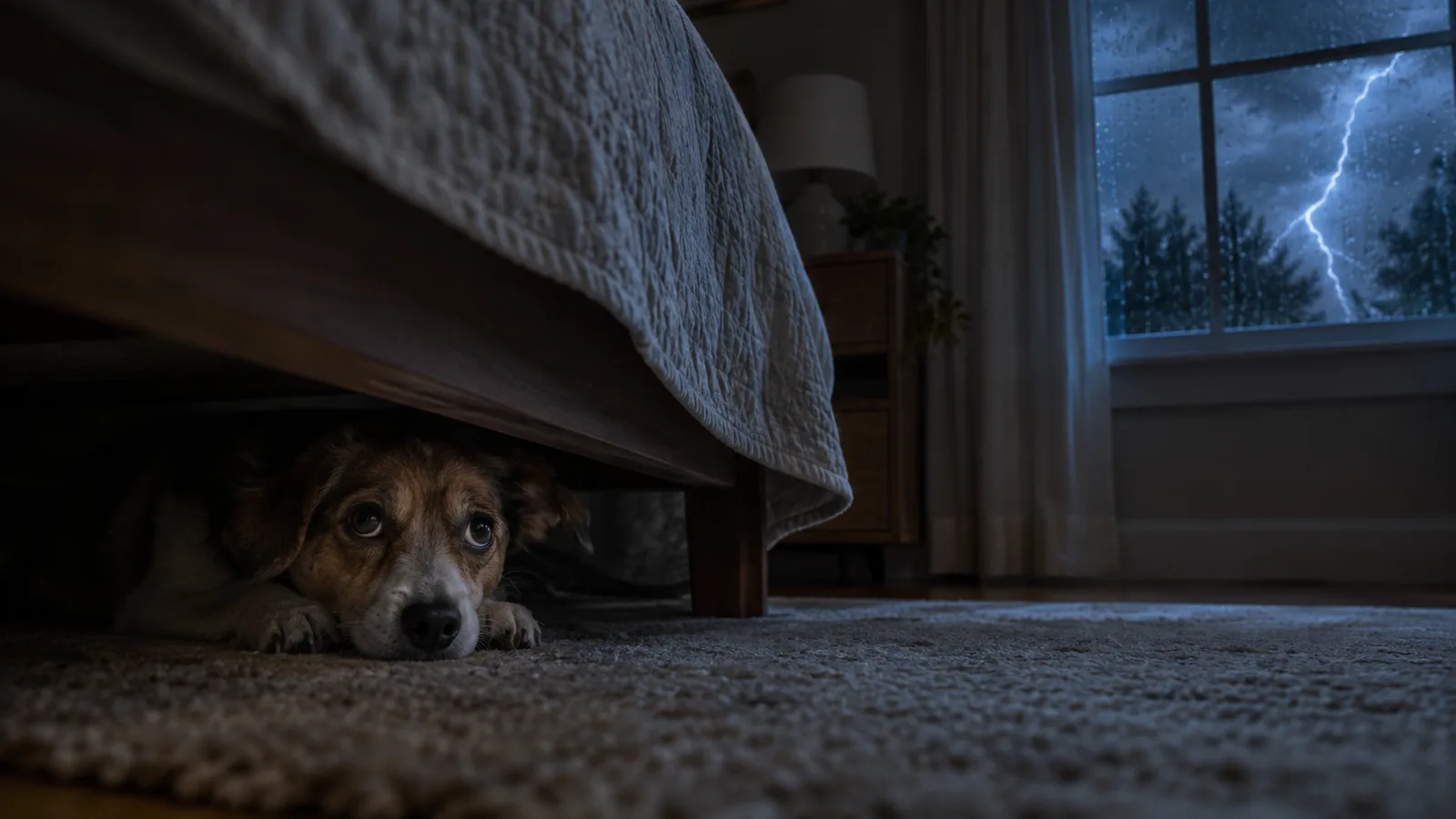
There is nothing quite as heartbreaking as watching your normally happy dog or cat suddenly turn into a shaking, hiding mess when a thunderstorm rolls through, or even when the blender kicks on for your morning smoothie. For many pet owners, managing noise sensitivity is a year-round challenge that goes far beyond fireworks on the Fourth of July. Maybe your dog starts pacing and panting at the first distant rumble of thunder, or your cat disappears under the bed the second the dishwasher starts its cycle. It is easy to feel frustrated and helpless when completely normal sounds cause your pet so much distress. But here is the thing worth knowing: this is a real medical issue, not bad behavior, and understanding that is the first step toward helping your pet feel better. Left unaddressed, noise phobias tend to get worse over time as the anxiety response becomes more deeply ingrained.
The good news is that you do not have to figure this out alone. Here at Valley Center Veterinary Clinic, an AAHA accredited and Cat-Friendly Certified practice, we take a collaborative approach to help you and your pet work through noise anxiety with personalized wellness plans and expert guidance. Whether it is behavioral adjustments, environmental changes, medical support, or a combination of all three, we will help you find a strategy that fits your pet and your household. If you are ready to get started, request an appointment and we will map out the best path forward together.
What Exactly Is Noise Phobia, and Why Does It Happen?
Noise phobia is more than a normal startle reaction. It is a persistent, intense fear response to sounds that gets in the way of your pet's daily life. A normal startle fades once the sound stops, but a true phobia can leave your pet trembling, hiding, or refusing to eat long after things have gone quiet.
The reasons behind it vary from pet to pet. Some develop a noise phobia after one particularly frightening experience, while others get there through repeated exposure over time. Genetics play a role too, and pets who missed out on early socialization with a variety of sounds can be more vulnerable. It is also worth knowing that noise sensitivity does not always exist on its own. Pets who struggle with separation anxiety or generalized anxiety often have a harder time with sounds as well. And sometimes the root cause is physical. Pain, ear infections, or age-related changes can make a pet more reactive to noise, which is why it is important to rule those things out.
Our veterinarians typically start with a gentle exam and targeted tests through our diagnostic services to rule out pain or illness before we start building a behavior plan. That way, we are treating the whole picture, not just the symptoms.
What Are the Most Common Noise Triggers for Pets?
Why Do Thunderstorms Hit So Hard?
Storms are one of the top triggers for noise-sensitive pets, and there is a good reason for that. A thunderstorm is not just loud. It is a full sensory event that combines sound, light, pressure changes, wind, and even smell, all at once. Many dogs can actually sense a storm building before you can, which explains why your pet might start pacing or panting when the sky still looks perfectly clear.
Each storm also has a way of building on the last one. If your pet was anxious during the last storm, the next one may feel even scarier because the brain has already connected those sensory cues to fear. And if you have ever tried playing a thunder recording to help your pet get used to the sound, you may have noticed it did not quite do the trick. That is because recordings cannot replicate the barometric pressure changes, static electricity, or vibrations that come with a real storm. Treatment needs to account for more than just the noise itself.
If your pet panics during holidays or local events, basic pet safety tips also apply during storm season: secure doors and gates, make sure ID tags and microchips are up to date, and have a quiet retreat ready. Here in Valley Center, seasonal storm clusters and Santa Ana winds can rattle doors and raise indoor noise levels, so a little planning goes a long way.
Common storm-related signs to watch for include restlessness and clinginess before the storm arrives, shaking, hiding in bathrooms or closets, whining, and drooling at the peak of the weather, and lingering tension or reluctance to go outside even after the skies have cleared.
Which Everyday Household Sounds Can Set Pets on Edge?
You might be surprised by how many ordinary household sounds bother a noise-sensitive pet. Vacuums, blenders, dishwashers, and garbage disposals are common culprits. Doorbells, alarm clocks, phone notifications, and especially that high-pitched chirp from a smoke detector with a low battery can all be triggers too. Even the rumble of a garage door or the heavy vibration of a washing machine on spin cycle can be enough to unsettle a sensitive pet.
The key is learning to spot the early, subtle signs of stress before things escalate. Lip licking, yawning, turning away, and avoiding a room are all early warning signs that something is bothering your pet. Understanding dog communication and body language can help you catch these moments sooner. For many pets, worry builds step by step, and a simple stress ladder illustrates this progression really well. If you are noticing small signals becoming more frequent, acting early prevents them from snowballing into a full-blown phobia. Our wellness and preventive care team can help you put a plan in place that supports both behavior and overall comfort.
How Can You Tell If Your Pet Has a Noise Phobia?
The most reliable way to identify noise phobia is to look for patterns. Mild signs often escalate if nothing changes, so catching them early gives you the best head start.
- Mild: Alert posture, pinned ears, scanning the room, light pacing, or freezing for a moment
- Moderate: Trembling, hiding, whining or barking, excessive panting or drooling, refusing treats
- Severe: Destructive behavior, bolting or escape attempts, self-injury, loss of bowel or bladder control
Other clues include dilated pupils, a sudden refusal to go outside in certain weather, and clinging to you in ways that feel unusual. Over time, chronic noise-related stress can chip away at your pet's quality of life and put a strain on your household routine too.
If any of this sounds familiar, it is worth scheduling an assessment. Our adult dog wellness and adult cat wellness visits are a great place to start the conversation and begin building a calm, consistent plan.
What Can You Do to Help Right Now?
During a Noisy Event
When a storm hits or a loud event starts, the goal is to move your pet to a quiet space and soften the sensory load as much as possible. And here is something important that many pet owners worry about: comforting your scared pet will not reinforce their fear. You are not rewarding anxiety by offering reassurance. You are helping them feel safe.
Here is a quick action plan:
- Set up a retreat in a quiet, interior room with cozy bedding and something that smells like you.
- Close curtains and blinds to block flashes of light and movement outside.
- Turn on steady background sound like white noise, a fan, or calming music to help mask the trigger noise.
- Offer a food puzzle or long-lasting chew if your pet is willing to eat. Sometimes a little distraction helps.
- Stay calm yourself. Breathe slowly, speak softly, and let your presence be a source of comfort.
While you are setting up a safe space, it is also a good idea to think about broader pet-proofing your home strategies, like securing windows and limiting access to exterior doors during panic moments.
How Does Daily Enrichment Help a Noise-Sensitive Pet?
Think of enrichment as filling your pet's coping tank. A pet who gets regular mental stimulation, physical exercise, and positive experiences throughout the day has more resilience to draw on when something unexpected happens.
Some easy ways to build that resilience:
- Rotate toys regularly and try scent-based games that engage the brain
- Add short, upbeat training sessions to build confidence
- Use food puzzles or chew sessions for calming, low-intensity mental activity
- Keep exercise consistent and matched to your pet's needs, because better sleep means better mood
If you are looking for ideas, there are some wonderful resources structured at-home enrichment for dogs that are easy to put into practice. Our team can also help tailor activities for anxious pets during routine visits so that enrichment fits your pet's age, health, and personality.
What Training Approaches Actually Work for Noise Phobia?
Desensitization and Counterconditioning, Explained Simply
These two techniques are the foundation of most noise phobia treatment plans, and they work best when you start small, move slowly, and pair the sound with something your pet loves.
- Desensitization means playing a very low-volume version of the trigger sound and only increasing the volume when your pet is relaxed and comfortable at the current level.
- Counterconditioning means pairing that low-volume sound with something wonderful, like tiny treats, a favorite game, or a gentle massage.
- Keep sessions short and schedule them during calm periods. Give your pet several rest days each week.
- If your pet stiffens up, refuses food, or starts scanning the room, the sound is too loud or the session has gone on too long. Back up to the last level that felt comfortable.
- Timelines vary. Some pets make progress in weeks, others take months. And because storm recordings cannot replicate pressure changes and static, storm-specific phobias usually need a broader approach.
These plans work best when they are customized to your pet. Our team can design a progression that fits your home, your schedule, and your pet's learning style, and we will layer in medical support if it is needed.
Why Positive Reinforcement Matters So Much
The most effective way to build a braver pet is to reward the behaviors you want to see and avoid punishing the ones driven by fear. Punishment does not reduce anxiety. It just teaches your pet to hide their fear, which makes things harder to manage.
Some simple things to practice:
- Teach a "go to your safe spot" cue and reward calm settling
- Practice easy, low-pressure behaviors like nose targeting or mat work
- Keep training sessions short so you always end on a good note
Building confidence through positive training helps your pet learn that good choices lead to good outcomes, especially when the world gets loud. If you want hands-on coaching to get started, reach out through contact us and we will point you in the right direction.
When Should You Consider Medication or Calming Aids?
If your pet cannot relax during noise events, skips meals, or is too anxious to focus during training, it may be time to add medication or calming aids alongside your behavioral plan. There is no shame in that. Sometimes the anxiety is too high for training alone to break through, and giving your pet a little extra support can actually help the training work better.
Here is what we might discuss together:
- Situational medications given before predictable events like storms or noisy yard work nearby
- Daily anti-anxiety medications for pets with persistent, ongoing worry that affects their quality of life
- Calming supplements like anxiety supplements that can take the edge off for milder cases
- Pheromone diffusers and sprays that mimic natural calming signals and can help create a more relaxing environment
- Pressure wraps and ThunderEase products that provide gentle, constant pressure to help soothe anxious pets
- Multimodal plans that combine environmental changes, training, and medical support for the best results
Every medication plan is individualized and monitored closely to keep your pet safe and comfortable. Some medications need time to build up in the system, so it is smart to start well before the next storm season rather than scrambling when the weather turns. If you think your pet could benefit from this level of support, request an appointment and we will put together a plan that fits your pet's health and your home life.
How Can You Set Your Pet Up for Long-Term Success?
Starting Early With Puppies and Kittens
The best time to build sound confidence is when your pet is young, but it is never too late to start. For puppies and kittens, the approach is straightforward: pair new sounds with good experiences and keep the practice going as they grow.
- Play household and weather recordings at very low volumes during meals or gentle play
- Gradually increase the volume over days, always watching body language for signs of stress
- Introduce real-life sounds like doorbells or appliance startups with treats at the ready
- Keep sessions brief, positive, and pressure-free. If you see stress, back up a step.
If your family is welcoming a young pet, our kitten wellness and puppy and dog wellness programs include guidance on sound exposure, early training, and building a strong behavioral foundation from the start.
Building an Ongoing Plan With a Team That Knows Your Pet
Noise phobias are very manageable, but they do best with consistent support. Progress is built through steady routines, realistic expectations, and a plan that adjusts as your pet grows and changes. Regular check-ins allow us to fine-tune training steps, adjust medications if needed, and celebrate the wins along the way, because every small step forward matters.
If you are not sure where to start with any of this, contact us and our client care team will help you to get the ball rolling.
Your Pet Deserves to Feel Safe at Home
You are not alone if your home feels tense during storms or when everyday appliances hum to life. With patience, thoughtful changes to your pet's environment, positive training, and medical support when it is needed, many pets learn to cope with sounds that once sent them into a panic. Some even learn to relax through them.
Our team at Valley Center Veterinary Clinic is here to partner with you every step of the way. We will explain the "why," map out the "how," and be there for the check-ins that keep things moving in the right direction. If your pet is struggling with noise sensitivity, request an appointment today and let us help you build a calmer, happier routine together.