


You know the sound. That sudden retching noise from the other room that sends you sprinting across the house, already mentally calculating how hard this cleanup is going to be. Most pet owners have dealt with the occasional upset stomach, and once in a while, it is just that. But when vomiting keeps happening week after week, it stops being a messy inconvenience and starts becoming a medical concern. Chronic gastrointestinal disease in pets can be subtle at first, then gradually impact weight, energy, and overall health. Recognizing when “just a sensitive stomach” may be something more is the first step toward getting real answers and meaningful relief.
Valley Center Veterinary Clinic is an AAHA-accredited, Cat-Friendly Certified practice in Valley Center, CA, and we believe in walking owners through every step of the diagnostic reasoning rather than simply handing over instructions. Our comprehensive diagnostics support a thorough GI workup, and our collaborative approach means you’ll understand not just what to do, but why. Contact us to discuss a chronic vomiting concern and build a plan together.
When Is Vomiting More Than Just a Vomiting Problem?
Every dog eats something questionable eventually. Every cat brings up a hairball. A single episode of vomiting that resolves on its own, with the pet eating normally and acting well, is usually not cause for alarm.
Chronic vomiting is different. It refers to vomiting that happens repeatedly over weeks or months, whether that’s daily, several times a week, or in persistent clusters. Hairballs in cats deserve more scrutiny than they often get: frequent hairball vomiting can signal underlying motility issues rather than just a grooming problem, and a cat vomiting more than once or twice a month warrants evaluation.
Warning signs that push a vomiting pet toward prompt veterinary assessment include:
- Unexplained weight loss alongside vomiting
- Decreased energy or appetite
- Changes in water consumption or urination habits
- Blood in vomit, or vomit that looks like coffee grounds
- Concurrent diarrhea
- Abdominal pain or sensitivity when touched
- Vomiting that is worsening in frequency or severity
These signs can reflect problems in the stomach, intestines, or organs elsewhere in the body, including conditions that become more common with age. Tracking senior pet health through regular wellness exams helps establish baselines that make changes easier to catch early at our wellness and preventive care visits.
What Causes Chronic Vomiting in Dogs and Cats?
The list is genuinely long, which is why a systematic diagnostic approach matters more than guessing. Causes broadly fall into a few categories.
Food-Related Causes
A pet can develop sensitivity to a food they’ve eaten for years. Food allergies involve an immune reaction to a specific protein, typically chicken, beef, dairy, or fish. Food intolerances cause digestive upset through a different mechanism and don’t involve the immune system, but both produce similar symptoms: vomiting, diarrhea, skin changes, or some combination of all three.
Dietary indiscretion is a separate issue. Rotating treats, table scraps, raiding the trash, or scavenging on outdoor walks introduces unpredictable ingredients into the GI tract. In pets with sensitive systems, this can be enough to keep low-grade inflammation going indefinitely. Choosing pet food thoughtfully, including what goes in between meals, is part of managing GI health.
Organ Disease
Vomiting doesn’t always originate in the stomach or intestines. Organs elsewhere can drive the symptom just as effectively.
Chronic kidney disease is especially common in senior cats and frequently presents as daily vomiting alongside weight loss and increased thirst. Gall bladder disease and liver disease both disrupt digestion and produce nausea that leads to vomiting. Feline hyperthyroidism accelerates GI motility to the point where food passes through too quickly for proper absorption, causing chronic vomiting alongside weight loss despite a strong appetite. Pancreatitis, inflammation of the pancreas, is a common and sometimes underdiagnosed cause of intermittent vomiting in both dogs and cats.
In-house bloodwork and urinalysis allow our team to evaluate organ function efficiently during the same visit, so these possibilities can be assessed without delay. Many of these diseases are more common as pets age, making regular lab work as a part of senior pet wellness critical for long-term health.
Primary GI Tract Disorders
When the GI tract itself is the source of the problem, the possibilities include:
- Inflammatory bowel disease, a chronic condition causing persistent gut inflammation that disrupts normal absorption and motility
- GI obstructions from swallowed foreign objects, including partial obstructions that cause waxing and waning symptoms over days to weeks
- Gastric ulcers from toxin exposure, prolonged NSAID use, or underlying disease
- Megaesophagus, a condition where the esophagus loses motility, causing regurgitation (food coming back up undigested, without abdominal effort) rather than true vomiting
- Bilious vomiting syndrome, causing early-morning yellow bile vomiting in dogs whose stomachs have been empty overnight
- Pyloric stenosis, a narrowing at the stomach’s outlet that slows food passage
- Lymphoma, which becomes increasingly common in older cats and can closely mimic IBD in its presentation
Could Eating Habits or Stress Be the Cause?
The “Scarf and Barf” Problem
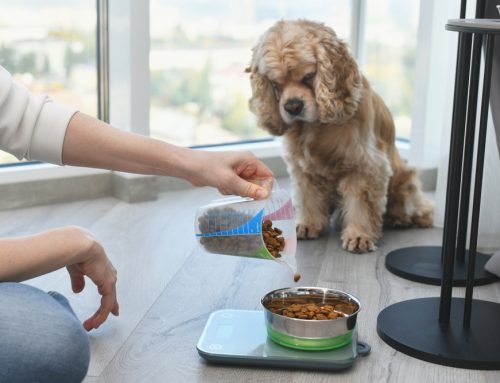
Some pets eat so quickly that food comes back up within minutes looking nearly unchanged. This is most common in dogs from multi-pet households where there’s competition at mealtimes, or in pets with a history of food insecurity. The fix is usually straightforward: interactive feeders that slow the pace of eating, smaller meals offered more frequently, or feeding pets separately to remove the competitive pressure.
Stress-Related Vomiting
Cats especially are prone to GI upset from stress. Routine changes, new people or animals in the home, construction noise, travel, or household tension can all trigger vomiting that has no dietary or structural cause. A pet whose vomiting consistently coincides with specific events, or who shows other signs of stress and anxiety such as hiding, overgrooming, or appetite changes, may be responding to an environmental trigger.
Feline stress in particular is worth taking seriously as a clinical factor. When stress is removed or managed, vomiting sometimes resolves without any other intervention. Our Cat-Friendly Certified environment is designed to reduce stress during visits, which also helps with more accurate clinical assessment.
How Does the Diagnostic Process Work?
The workup begins with a thorough physical examination and a detailed history. The timing of vomiting relative to meals, its appearance, how long it’s been happening, recent diet changes, and any environmental shifts are all relevant. Owners who have been keeping notes or photos find that information genuinely useful during the appointment.
Baseline testing typically includes:
- Bloodwork evaluating organ function, blood cell counts, hydration status, and thyroid levels in cats
- Urinalysis to assess kidney function and screen for infection or glucose in the urine
- Fecal testing for intestinal parasites that can cause or contribute to chronic GI symptoms
- Ultrasound or radiographs to assess organ size and structure, identify masses, and rule out obstructions
Our digital radiography and in-house laboratory allow most of this testing to be completed and reviewed during a single appointment, which speeds up the diagnostic process considerably.
How Food Trials Work and What They Tell You
When initial testing doesn’t point to a clear diagnosis, a structured dietary elimination trial is often the logical next step.
The Trial Itself
A food trial involves switching the pet to either a novel protein diet (a protein source the pet has never eaten before, such as venison or rabbit) or a hydrolyzed diet (in which proteins are broken down into fragments too small to trigger an immune response). The critical requirement is strict compliance: no treats, no flavored medications, no table scraps, and no access to another pet’s food for the duration of the trial. For GI symptoms, three to four weeks of strict compliance is typically enough to assess response, though skin-related allergy trials require longer.
Diet trial validity depends entirely on nothing else being fed during the trial period. Over-the-counter “limited ingredient” or “sensitive stomach” foods are not suitable for diagnostic purposes due to the risk of cross-contamination during manufacturing.
Interpreting the Results
If vomiting improves significantly on the trial diet and returns when the original food is reintroduced, food sensitivity is confirmed and the treatment is simply maintaining the diet that works. If there’s no meaningful improvement despite strict compliance, the focus shifts toward primary GI disease or systemic illness, and the next diagnostic steps become clearer.
When Is a Biopsy Necessary?
Some cases require tissue samples to reach a definitive diagnosis, particularly when IBD, lymphoma, or other chronic GI conditions are suspected.
Endoscopy
Endoscopy uses a flexible camera to visualize the upper GI tract and collect surface tissue samples while the pet is under anesthesia. Recovery is typically rapid, and it provides direct visualization of the stomach and upper intestine. It is most useful when abnormalities are expected in areas the scope can reach.
Exploratory Surgery
Exploratory surgery allows the team to directly examine abdominal organs, identify masses or structural abnormalities, and collect full-thickness GI biopsy samples from multiple locations. Full-thickness samples provide more diagnostic information than surface endoscopic samples and may reveal disease that endoscopy would miss. Surgery is recommended when imaging findings suggest abnormalities that need hands-on evaluation, or when deeper tissue sampling will meaningfully change the diagnosis and treatment approach. We can perform exploratory surgeries and GI biopsies right here at Valley Center, and refer to board-certified specialists for endoscopy when needed.
What Biopsies Reveal
Biopsy results distinguish between IBD and lymphoma, which can look clinically similar, as well as other inflammatory conditions, infections, and cancer types. This distinction matters enormously because the treatments differ significantly. Reaching an accurate diagnosis makes treatment targeted rather than approximate.
Treatment Approaches
How chronic vomiting is treated depends entirely on what’s causing it.
Food-responsive vomiting is managed by maintaining the diet that worked during the trial. This includes household rules about what gets fed, navigating multi-pet homes where another animal’s food is accessible, and planning for holidays and travel.
IBD typically requires a combination of anti-inflammatory or immune-modulating medications, appropriate dietary adjustment, and often probiotic support to help restore gut flora. Treatment is individualized because pets respond differently, and finding the right combination sometimes takes some adjustment over time.
Systemic disease is addressed at the source. Kidney disease is managed with hydration support, prescription diets, and medications that reduce the buildup of waste products. Hyperthyroidism is treated with daily medication, radioactive iodine, or surgery depending on the individual case. Pancreatitis management focuses on pain relief, anti-nausea care, and dietary modification. In most cases, treating the underlying condition resolves or substantially improves the vomiting.
Being a Good Partner in the Diagnostic Process
Owners are not passive observers in this process. The observations you make at home are genuinely useful clinical information.
Keeping a simple symptom log, noting timing relative to meals, what the vomit looks like, what the pet ate that day, and any behavior changes, makes appointments more productive and helps us spot patterns. Photos are helpful. Consistent medication schedules matter. And reaching out promptly if your pet stops eating, seems painful, becomes lethargic, or vomits more frequently between visits ensures the workup can be adjusted as needed.
Our Cat-Friendly Certified environment and collaborative team approach mean that questions are welcome and expected. Our goal is for you to leave every appointment understanding what’s happening and why.

Frequently Asked Questions About Chronic Vomiting in Pets
When does vomiting become an emergency? Profuse or continuous vomiting, blood in the vomit, a bloated and painful abdomen, inability to keep water down, collapse, or pale gums all require urgent care. We handle most emergencies in-house during business hours; after hours, we recommend using VetTriage, a 24/7 telehealth service that can let you know if you should go to an overnight ER or if you can wait to see us the next day. Our emergencies page lists after-hours resources for situations that arise overnight.
What’s the difference between vomiting and regurgitation? Vomiting involves visible abdominal effort and usually produces digested or partially digested food. Regurgitation is passive: food or fluid comes back up without abdominal heaving, often shortly after eating and looking largely undigested. Regurgitation points toward esophageal problems like megaesophagus rather than stomach or intestinal disease.
Can a food allergy develop suddenly in a pet who’s been eating the same food for years? Yes. Allergies develop through repeated exposure, and a pet can become sensitized to a protein they’ve eaten without issue for a long time. This is one reason why “but they’ve always eaten this” doesn’t rule out food sensitivity.
How quickly will I see improvement on a food trial? For GI symptoms, meaningful improvement often becomes visible within two to four weeks of strict compliance. If there’s no change after four weeks of true adherence, it’s reasonable to conclude food is not the primary driver.
Will my pet definitely need a biopsy? Not necessarily. Many cases are resolved through bloodwork, urinalysis, imaging, and a food trial without ever requiring endoscopy or surgery. Biopsies are recommended when those tools don’t provide a complete enough answer to guide treatment confidently.
A Clear Diagnosis Is Worth the Work
Chronic vomiting is genuinely exhausting to manage, and it’s easy to feel like you’re throwing things at a problem without making progress. A systematic approach changes that. When each test answers a specific question and either confirms a cause or narrows the possibilities, the path to effective treatment becomes clear.
We approach every chronic GI case the same way: methodically, collaboratively, and with you as a genuine partner in the process. Request an appointment to start working through a vomiting concern, and expect to leave knowing exactly what the next step is and why. We’re here to help.






Leave A Comment