

Timing matters with a swollen lymph node because the causes behind it get harder to treat the longer they run. Ticks stay active nearly year round in the Valley Center foothills, and an infected bite, an abscessed tooth, or a wound that looked minor at the time can all enlarge a node long before your dog or cat acts sick. An infection treated in its first weeks usually clears with antibiotics, while the same one found months later can leave joint damage and kidney disease behind. Lymphoma caught while your pet still feels well keeps every treatment option open, and a late diagnosis narrows those choices fast.
At Valley Center Veterinary Clinic, we can often start narrowing down the cause of an enlarged lymph node during the same visit. Our in-house blood work, digital X-rays, and ultrasound help us look for infection, inflammation, and other changes elsewhere in the body, and a small sample from the node itself can tell us much more about what is causing the swelling. Most enlarged lymph nodes do not come with an obvious explanation from the outside, so if you have noticed a new lump under your pet’s jaw, in front of a shoulder, or behind a knee, book a time at our AAHA-accredited hospital to have us check it.
What a Swollen Node Is Telling You
- A swollen lymph node is a sign, not a diagnosis, and it means the immune system has switched on somewhere nearby.
- An infection and a cancer can feel identical under your fingers, so the answer comes from a sample rather than from watching and waiting.
- Sampling a node with a fine needle takes under a minute and rarely calls for sedation.
- Nodes sit close to the surface in five places on the body, which makes a monthly hands-on check at home worth the two minutes it takes.
Where Are My Pet’s Lymph Nodes, and What Do They Do?
Lymph nodes are immune checkpoints sitting along the body’s drainage routes. Fluid from the tissues passes through them on the way back to the bloodstream, and the cells packed inside trap bacteria, viruses, and stray abnormal cells, then call in reinforcements. Most days you’d never know they were there. Swelling is that call going out.
The lymph node locations you can reach with your own hands sit under the jaw, in front of the shoulders, in the armpits, in the groin, and behind each knee. Each one drains a territory, which makes position a clue all by itself. The pair under the jaw handles the mouth, teeth, and face, so a cracked tooth or a chewed lip registers there first. The ones behind the knees cover the back feet and legs.
We run our hands over all of them at every preventive care visit, which is how a baseline gets built. A node that felt like a pea last spring and feels like a grape today tells a much clearer story than one we’re seeing enlarged for the first time.
What Happens at the Visit When We Check a Swollen Node?
The workup moves in a set order: physical exam first, then a sample of the node with blood work and tick testing, and then imaging and a biopsy if questions are still open.
What Can We Learn Just by Feeling the Node?
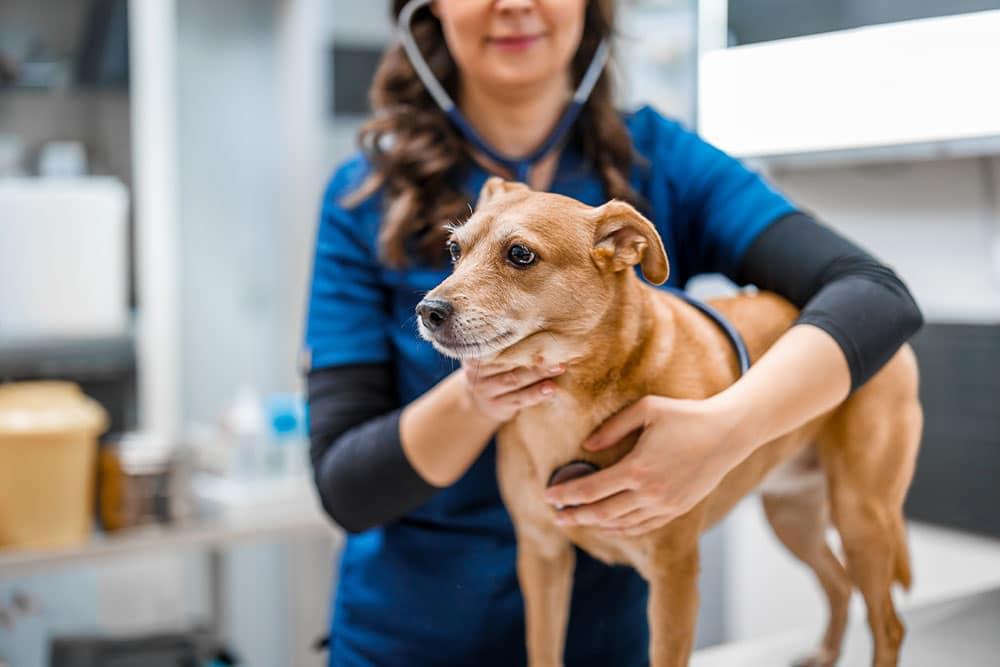
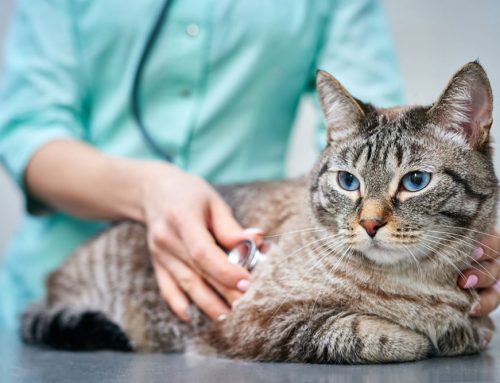
A careful hands-on exam narrows the list before any needle comes out. We’re reading size against what’s normal for that spot, then texture, firmness, whether the swelling sits on one side or both, whether it hurts, and whether it slides freely under the skin or feels anchored to the tissue below.
One warm, tender node usually means something local: a scrape, a hot spot, an infected tooth if the swelling is under the jaw. Several firm, painless, rubbery nodes in different parts of the body point more toward cancer, while several painful nodes with a fever point more toward an infection affecting the whole body. Swelling that feels stuck in place worries us most, because a healthy node moves freely under the skin.
Does the Needle Sample Hurt?
Fine needle aspiration draws cells out of the node with a small needle in under a minute, and most pets sit through it awake with nothing more than a gentle hold. It feels much like a vaccination and is over just as fast.
Those cells carry most of the answer. Inflammatory cells with bacteria among them say infection. A mixed crowd of normal lymphocytes says the node is reacting to something and doing its job. Sheets of large, immature cells raise the question of lymphoma, and slides like that go to a clinical pathologist for confirmation.
When a sample comes back inconclusive, when the node sits too deep to reach, or when the plan depends on knowing exactly which subtype of lymphoma is involved, a surgical biopsy takes a whole piece of tissue under anesthesia instead. Every sample we take is collected, handled, and documented under the AAHA accreditation standards we hold ourselves to.
What Do Blood Work and Imaging Add?
A complete blood count and chemistry panel show what a node can’t: infection-fighting cells on the rise, anemia, low platelets, organ values starting to drift. Testing for tick-borne organisms runs alongside them, and chest radiographs and an abdominal ultrasound reach the nodes and organs no hand can feel.
Our in-house blood work, X-ray, and ultrasound cover most of that workup. When lymphoma is on the table, imaging also stages the disease: how many node groups are involved, whether the spleen and liver have changed, what the chest looks like. Stage shapes both the treatment plan and what we can honestly tell you about the road ahead.
What Makes a Lymph Node Swell in the First Place?
Three broad things enlarge a node: infection, an immune system reacting to something it shouldn’t, and cancer. Sorting between them starts with which nodes are involved and how the rest of your pet is doing.
Which Infections Turn Up as Swollen Nodes?
Infection is the most common answer, and it’s often something picked up outdoors or from an injury. When a single node is involved, we look for a problem near it: a foxtail wound, an abscessed tooth, a scrape, or a cat bite.
The organisms that swell several nodes at once are the ones worth knowing by name; any virus or bacteria can cause enlargement of the nodes, and some are temporary while others need significant treatment to clear.
- Tick-borne: Ehrlichia and Anaplasma can enlarge several nodes at once alongside fever, joint pain, and a dropping platelet count. Lyme disease often announces itself as swelling in the node nearest the tick bite, weeks before the shifting lameness most families associate with it.
- Bacterial: Leptospirosis spreads through standing water and wildlife urine, and it can damage the kidneys and liver while the nodes react. Mycobacteriosis is rarer, mostly feline, and tends to show as chronic skin lumps and nodes that never quite resolve.
- Fungal: Valley Fever comes from a soil fungus dogs inhale when dry ground gets disturbed, and in our corner of Southern California it belongs on the list any time a cough, a limp, and swollen nodes show up together. Histoplasmosis, blastomycosis, and aspergillosis do much the same thing in other parts of the country.
- Viruses: A cat with persistently enlarged nodes needs testing for feline leukemia virus rather than just a course of antibiotics. Feline immunodeficiency virus wears the immune system down on a slower clock and runs on the same quick blood test. A dog with influenza may have enlarged nodes temporarily just like a human who caught a cold or flu.
- Parasites: Toxoplasmosis can enlarge nodes in cats and occasionally in dogs, and a heavy load of intestinal worms or Giardia keeps the nodes draining the gut busy for as long as it goes untreated. Fleas and mites do the same from the outside, since inflamed skin sends a constant signal to the nodes beneath it.
Could This Be Lymphoma?
Canine lymphoma is the most common reason a dog’s nodes balloon over a few days while the dog keeps eating, playing, and acting perfectly normal. That disconnect is exactly why a big lump on a happy dog still needs a sample this week.
About one in fifteen dogs born today will develop the disease, and the risk climbs to roughly one in eight for lymphoma in Golden Retrievers. It’s also among the most treatable, though not curable, cancers in dogs.
Feline lymphoma more often settles in the intestinal tract than in the nodes you can feel, so weight loss, vomiting, and a fading appetite are frequently the first signs. Other tumors travel to nodes as well: mast cell tumors, melanomas, and carcinomas seed the node that drains their territory first, so we often sample both a mass and the node it feeds.
What Else Can Swell a Node?
Not every enlarged node has an infection or a tumor behind it. Immune-mediated diseases, problems with lymph drainage, or a recent vaccine can also cause nodes to swell. All three need the same workup, because feel alone won’t separate them.
How Are Swollen Lymph Nodes Treated?
Treatment follows the diagnosis, never the reverse. An antibiotic started on a hunch can shrink a reactive node just enough to muddy the picture, and push a lymphoma diagnosis back by weeks.
| What the workup finds | What treatment usually looks like |
| Local bacterial infection | Treating the source: cleaning a wound, extracting a diseased tooth, a targeted antibiotic course |
| Tick-borne infection | Several weeks of doxycycline, with recheck testing to confirm the response |
| Fungal infection | Long antifungal courses, often many months, with periodic monitoring |
| Feline viral infection | No cure, so care focuses on catching secondary problems early and keeping cats indoors |
| Immune-mediated disease | Medication to calm the immune system, tapered slowly with blood work along the way |
| Lymphoma | Chemotherapy protocols aimed at remission, or prednisone alone when comfort is the goal |
Can Swollen Lymph Nodes Be Prevented?
A good share of them can. Parasite control, core vaccines, and healthy teeth remove three of the most common reasons nodes light up at all. Nothing prevents lymphoma, but consistent preventive care is still the most reliable way to catch it early.
- Parasite prevention: Year-round flea and tick coverage takes most tick-borne infections off the table and spares the skin the constant irritation that keeps nodes enlarged. Vaccinations also cover many of the diseases that cause infection, like leptospirosis and Lyme disease for dogs, and Feline Leukemia for cats.
- Dental health: A mouth carrying periodontal infection keeps the nodes under the jaw activated for years on end. Professional dental cleanings paired with dental X-rays find the disease below the gumline, where most of it hides.
- Earlier detection: Blood-based screening tests can flag lymphoma months before a pet shows a single outward sign. They don’t replace an exam, and they’re a sensible addition for senior dogs and higher-risk breeds.
How Fast Does a Swollen Node Need to Be Seen?
Most swollen nodes deserve an appointment within a couple of days rather than a wait-and-see month. Where yours falls comes down to how fast it grew and how your pet is doing otherwise.
| Urgency | What that looks like |
| Same day | Labored breathing, trouble swallowing, a swelling pressing on the throat, pale gums, collapse, high fever, or a node that doubled overnight |
| Within 48 hours | A newly enlarged node anywhere, several enlarged at once, a firm painless lump on a dog who feels fine, or any swelling alongside weight loss |
| This week | Slightly larger than last month’s check, mild and stable, in a pet eating, drinking, and behaving normally |
We handle emergency and urgent care during our open hours, and walk-ins for emergencies are welcome whenever staffing allows. Once we’ve closed for the night, a swelling that’s affecting breathing belongs at the nearest 24-hour veterinary emergency hospital instead of waiting for morning. Not sure which row fits? Call us and describe what you’re feeling, or use our VetTriage service for after-hours advice.
Your Swollen Lymph Node Questions, Answered
Can a Swollen Lymph Node Go Down on Its Own?
It can. A node that reacted to a small wound, vaccine, or a mild virus often returns to normal within a week or two once the immune system finishes up. The catch is that nothing on the outside tells you which swellings will do that, and lymphoma nodes sometimes shrink temporarily too. Giving it two weeks is reasonable only when a pet feels completely well and the change is small and limited to one location.
Should I Worry About a Big Node in a Puppy or Kitten?
Young animals run larger nodes than adults as a rule, because their immune systems are meeting the world for the first time. Mildly prominent nodes on a thriving, bouncy puppy or kitten are frequently normal. What isn’t normal is a youngster with enlarged nodes plus lethargy, fever, diarrhea, or poor growth. That combination usually points at parasites or an infection worth treating now rather than at the next scheduled visit.
My Dog’s Node Shrank on Antibiotics. Are We Done?
Possibly, though it’s worth confirming instead of assuming. Antibiotics shrinking a node that was fighting bacteria is the outcome you want. Steroids sometimes get folded into treatment as well, and they shrink lymphoma nodes too, temporarily and misleadingly. A recheck a few weeks after the course ends tells us whether the swelling stayed gone for good, and if it returns, the next step is a sample rather than a second prescription.
Turning a Strange Lump Into a Clear Answer in Valley Center
The hardest part of finding a lump under your dog’s jaw on a Sunday evening usually isn’t the lump. It’s the not knowing, and the way an ordinary week suddenly has a question sitting in the middle of it. That part usually ends quickly, because a node gives up its answer as soon as someone puts the cells under a microscope.
We’ve sat with a lot of families on the other side of this exact worry, and it almost always goes better when it starts early. Bring us your questions and book a visit at Valley Center Veterinary Clinic. We’ll sort it out together.



Leave A Comment