

Intervertebral disc disease (IVDD) can go from a mildly sore back to dragging back legs in a matter of hours, and whether your dog can avoid surgery depends largely on how much nerve function is still intact when treatment begins. The early signs are easy to brush off: a dog who suddenly refuses the stairs, yelps when picked up, walks with a hunched back, or wobbles in the hind end. X-rays help narrow down the cause of the pain, while advanced imaging such as an MRI pinpoints the exact disc before any operation. Dogs with pain but steady legs often recover with strict rest and medication, while dogs losing coordination or the ability to walk need a surgical evaluation quickly, because the clock on a full recovery runs faster than most families realize.
A dog who was fine at breakfast and dragging a back leg by dinner cannot wait for next week’s opening, which is why Valley Center Veterinary Clinic offers urgent care for dogs alongside our regular appointments. We begin with a hands-on neurological exam and in-house X-rays to rule out other causes of back pain, then take you through our thought process so the choice between strict rest with medication and a surgical consult is a decision we reach together. For dogs on the medical path, we also have cold laser therapy, a non-invasive light treatment that helps calm the inflammation around an irritated disc. If your dog is yelping, hunched up, or losing control of the back legs, call us right away, and if we are closed, head straight to the nearest veterinary ER.
The Short Version, Because IVDD Moves Fast
- IVDD can move from a sore back to dragging back legs within hours, so a dog who suddenly changes how they move needs to be seen quickly, not watched for a few days.
- Dogs who still walk but hurt often recover with strict rest, medication, and cold laser therapy, while dogs losing coordination or the ability to stand need a surgical evaluation right away.
- The single biggest factor in recovery is how much nerve function is left when treatment starts, and dogs operated on within 24 to 48 hours of going down have the best odds.
- Cage rest, structured rehabilitation, weight control, and simple home changes like ramps drive both recovery and the prevention of a second disc event.
What Is IVDD, and Which Dogs Are Most Likely to Get It?
Intervertebral disc disease is the degeneration, bulging, or rupture of the cushioning discs that sit between the vertebrae, and when displaced disc material presses on the spinal cord or nearby nerve roots, it produces the pain and neurological signs that bring most dogs in. The disc is often described like a jelly donut; it’s normally soft and a little squishy to provide cushioning between the vertebrae, and when it ruptures, the jelly filling comes squirting out. That filling keeps pouring out the more the spine moves and the vertebrae push on the disc, and the more the filling comes out, the more it compresses the spinal cord.
IVDD follows two broad patterns. Type I is the sudden, forceful herniation, where a hardened disc ruptures and fires material up against the cord in one dramatic moment. It shows up most in chondrodystrophic breeds, the short-legged, long-backed dogs like Dachshunds, French Bulldogs, Beagles, Shih Tzus, and Corgis, sometimes in dogs only a few years old. Type II is the slower story: discs that bulge and stiffen over years, more common in larger breeds and older dogs such as Labradors, German Shepherds, and Dobermans.
Because that slower form creeps up on big-breed seniors, early stiffness noticed at a routine senior wellness visit is often the first clue that a spine deserves a closer look.
What Are the Early Warning Signs of IVDD in Dogs?
The early signs of IVDD run from mild back pain to full neurological failure: a dog who suddenly refuses stairs or the couch, holds their back hunched and tense, yelps when picked up or touched along the spine, walks wobbly or drunk in the hind end, or scuffs and knuckles the back paws. Weakness can slide into an inability to stand at all.
As pressure on the cord builds, some dogs lose control of the bladder or bowels, which is a red flag that the trouble has moved well past a simple sore back. One practical at-home check relies on conscious proprioception: gently flip a paw so the top touches the floor, and a healthy dog rights it instantly, while a paw that stays knuckled over points to nerve damage that already warrants same-day evaluation.
Not every stiff morning is a disc, but pain paired with any wobble or paw-dragging is worth a prompt call.
Why Does Timing Matter So Much Once IVDD Starts?
Timing matters because a compressed spinal cord doesn’t simply hurt, it swells and bruises, and that secondary injury keeps building the longer the pressure stays. In severe cases the slide from weak-but-walking to permanent damage can happen within hours, which is why IVDD is treated as an emergency, not a wait-list scenario.
IVDD stages are sorted by severity that run from pain alone through paralysis with loss of deep pain sensation, and each step up the scale shortens the window for a good outcome.
| Stage | What you might see | What it means |
| Grade 1 | Pain only, still walking normally, hunched and sensitive | Often managed medically with strict rest; good outlook |
| Grade 2 | Walks but wobbly, crossing or scuffing the back legs | Medical or surgical; strong odds with prompt care |
| Grade 3 | Can’t walk but can still move the legs | Surgery frequently advised; outlook still favorable if fast |
| Grade 4 | Paralyzed but can still feel a firm toe pinch | Surgery strongly recommended and time-sensitive |
| Grade 5 | Paralyzed with no deep pain sensation | Emergency; surgery within about 24 hours gives the best chance |
When these signs appear after we’ve closed, deciding between an emergency hospital and waiting for morning is hard, and our after-hours telehealth can help you judge the urgency and make the call.
How Do We Choose Between Surgery and Conservative Care?
The choice comes down to how much nerve function your dog still has and how fast it’s changing: dogs with pain and steady legs usually start with medical care, while dogs who can’t walk or are losing coordination need a surgical evaluation. Our in-house X-rays and imaging screen for other causes of a painful back, such as fractures, while pinpointing the exact ruptured disc before an operation takes an MRI, performed at a specialty center as part of the surgical workup.
| Factor | Conservative care | Surgery |
| Best for | Pain with normal or near-normal walking | Can’t walk, rapidly worsening, or lost deep pain |
| Care | 4 to 6 weeks strict cage rest, anti-inflammatories, pain meds | Decompression to relieve pressure on the cord |
| Timing | Start early, reassess often | Best within 24 to 48 hours of going down |
| Watch out for | Fails if the rest isn’t truly strict | Requires referral and careful planning |
When Surgery Is the Right Call
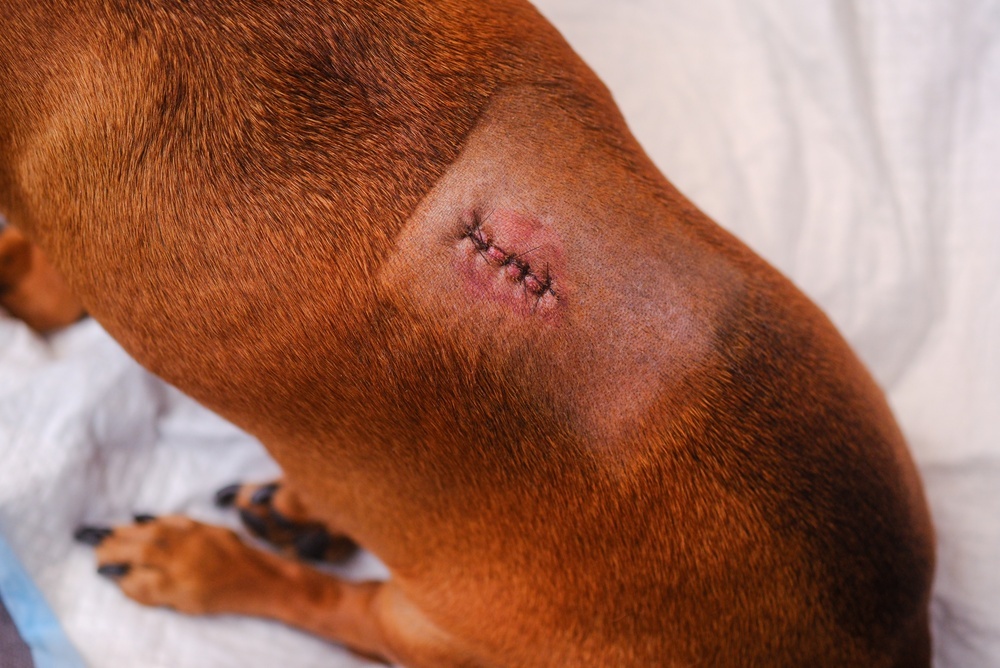
When a dog can’t walk, keeps worsening despite rest, or has lost deep pain sensation, taking pressure off the cord becomes the priority. Surgery must happen rapidly, before permanent damage to the spinal cord is done, and is usually the only hope for a fully paralyzed dog to walk again. The most common operation for a severe disc herniation is a hemilaminectomy, which removes a small portion of the vertebra to lift pressure off the spinal cord and give compressed nerves room to recover. Because this is specialized spinal surgery, it’s performed by a veterinary surgeon at a referral center, and our role is to catch it early and get you there fast.
When Conservative Care Fits
For dogs with mild signs who can still walk, conservative IVDD management pairs four to six weeks of strict cage rest with anti-inflammatory medication and pain control, and the most common reason it fails is a rest period that was only half-followed. Partial compliance isn’t the same as treatment: a few unsupervised zoomies can undo weeks of healing. Strict rest asks real discipline from the whole household. There’s also a lifetime of management that follows: strict weight management, limiting jumping or roughhousing, and close monitoring, as many dogs will relapse several times over their years.
Which Modern Therapies Help the Spine Recover?
Beyond rest and surgery, a few newer options are changing what treatment can look like: laser therapy during recovery, an experimental enzyme injection that may spare some dogs an operation, and, for select cases, regenerative medicine such as stem cell treatment. None of them replace decompression or cage rest when those are needed, but each can change the shape of a recovery.
Laser Therapy for Pain and Inflammation
Used alongside both surgery and cage rest, laser therapy in disc disease measurably eases pain and inflammation, which is part of why many dogs can taper off systemic pain medication as recovery progresses. The treatment uses specific wavelengths of light to nudge cells toward repair, and most dogs tolerate it easily. We offer cold laser therapy as part of the medical plan.
Stem Cell Therapy and Regenerative Medicine
Newer regenerative options such as stem cell therapy for IVDD use the body’s own repair cells to calm inflammation and support healing in damaged tissue, with growing evidence for better nerve function in dogs who have an incomplete recovery or aren’t surgical candidates. It’s not a first move; it usually comes up for dogs whose progress has stalled.
Clinical Trials and New Treatments
One of the most promising developments in years comes from researchers at Texas A&M, who are studying an enzyme injection for herniated discs that dissolves the displaced disc material through a needle instead of removing it through open spinal surgery. It’s still an emerging treatment in clinical trials rather than a standard offering, but research and new options at veterinary universities are certainly worth inquiring about.
What Does Home Recovery Actually Involve?
Home recovery rests on two pillars: strict confinement while the spine stabilizes, then structured rehabilitation to rebuild what was lost. Rushing the first or skipping the second is where good results quietly slip away.
Why Cage Rest Is Treatment, Not Just a Suggestion
Cage rest for spinal cord injury is the single most important part of conservative management and a critical safeguard after surgery, because movement at the wrong moment can worsen a herniation or undo a repair the spine hasn’t yet had time to stabilize. The confinement is strict: a small pen or crate, leashed potty trips only, and no jumping, stairs, or couch launches. When activity returns depends on neurological grade and how the healing is going, not on the calendar alone. Warm Valley Center evenings make confinement harder when the rest of the household is outside, so lean on food puzzles, gentle chews, a spot near the family, and calm company instead of physical play.
Rehabilitation to Rebuild Strength and Coordination
Structured rehabilitation consistently produces fuller recoveries than simply waiting out the rest period. A program might layer therapeutic exercises, underwater treadmill work that allows weight bearing with less joint stress, passive range-of-motion movement, and a progressive walking plan. We help map out a plan matched to your dog’s neurological grade, and a rear-support lifting harness makes those first wobbly trips outside safer by taking weight off the back end while your dog practices standing and stepping.
Can a Dog Live a Full Life with Lasting Mobility Changes?
A dog who never fully regains hind-end function can still live a rich, active life, and wheelchairs and mobility carts for dogs, alongside assisted bladder expression, padded bedding, and ongoing physical therapy, are a big part of how those dogs keep moving. Most wheeled or wobbly dogs adjust within weeks and go right back to being fully, joyfully themselves.
It’s also fair to be honest about what that life asks of you. Caring for a permanently paralyzed dog means expressing the bladder several times a day, keeping skin clean and dry to prevent sores, and doing a fair amount of lifting, and how a family absorbs that workload matters just as much as how the dog adapts. Thinking through quality of life with IVDD, for your dog and for the people caring for them, deserves the same careful attention as any treatment decision, and there is no shame in weighing it openly. Many dogs thrive on wheels; some families reach a different, equally loving answer, and we’ll walk through that conversation with you honestly whenever you need it.
Many families also find their footing in online communities built around dogs living with disc disease, where practical tips on carts, bladder care, and daily routines get shared every day.
How Can We Lower the Risk of IVDD Happening Again?
The single most controllable factor in preventing a second disc event is weight management for dogs, because every extra pound adds load to a spine that has already been through one injury. Beyond the scale, recurrence prevention is about taking repetitive strain off the back and rebuilding the muscle that stabilizes it.
- Cut the jumping impact: Ramps and pet stairs to the couch and bed remove the repeated hard landings that stress a vulnerable spine.
- Switch to a harness: A body harness instead of a neck collar keeps pressure off the cervical spine on walks, especially for dogs who pull.
- Ease off high-impact play: In the months after treatment, dial back the hard cutting, leaping, and rough wrestling, then reintroduce activity gradually.
- Build the core gently: Low-impact strengthening, like slow controlled walking and simple balance work, supports the muscles that hold the spine steady.
Because weight tends to creep up quietly, regular weigh-ins through personalized wellness plans help catch a few extra pounds before they become a real burden on the back.
Does IVDD Happen in Cats Too?
IVDD in cats is less common and usually slower to announce itself, surfacing as subtle changes like reluctance to jump, avoiding the litter box, or more hiding rather than the sharp pain responses typical in dogs. The diagnostic and treatment principles line up closely with dogs, but cats are quieter about discomfort, so a cat who stops making the leap to a favorite windowsill deserves a look rather than a shrug.
Breeds like the Persian and some larger cats appear to carry a bit more risk, and because the changes are easy to miss at home, they often surface first at routine feline wellness exams, where a small change in how a cat moves gets noticed early.
Frequently Asked Questions About IVDD in Dogs
Can a dog recover from IVDD without surgery?
Many dogs do. Dogs whose main problem is pain and who can still walk often recover well with strict cage rest, anti-inflammatory and pain medication, time, and sometimes laser therapy. The catch is that the rest has to be real confinement, not a quiet corner with occasional stair privileges. Dogs who can’t walk or who are losing deep pain sensation are a different story and usually need surgery.
Is IVDD painful for my dog?
It usually is, especially early on. Compressed nerves and inflamed tissue can make even being picked up hurt, which is why yelping, a hunched posture, and reluctance to move are such common first signs. Good pain control is a core part of treatment, whether the plan is medical or surgical. If a dog reaches full paralysis, they may not feel their legs anymore, but that loss of sensation is a serious warning, not a relief, and it calls for urgent evaluation.
How long does IVDD recovery take?
It varies with severity and the treatment path, but most conservative cases run four to six weeks of strict rest followed by a gradual return to activity, and surgical recovery often follows a similar arc with rehabilitation layered on top. Dogs with milder grades can bounce back in a few weeks, while dogs recovering from paralysis may need months of rehab. Consistent follow-through, not speed, tends to separate the fuller recoveries.
Getting Ahead of the Clock on IVDD
IVDD rewards two things above all: a fast first look and faithful follow-through on the plan that comes out of it. If your dog is suddenly sore, wobbly, or losing the use of their back legs, come straight in for urgent care at Valley Center Veterinary Clinic during our open hours, or head to the nearest veterinary ER if we’re closed. For an evaluation of milder signs or a recheck along the way, request an appointment and we’ll build the plan together.



Leave A Comment