

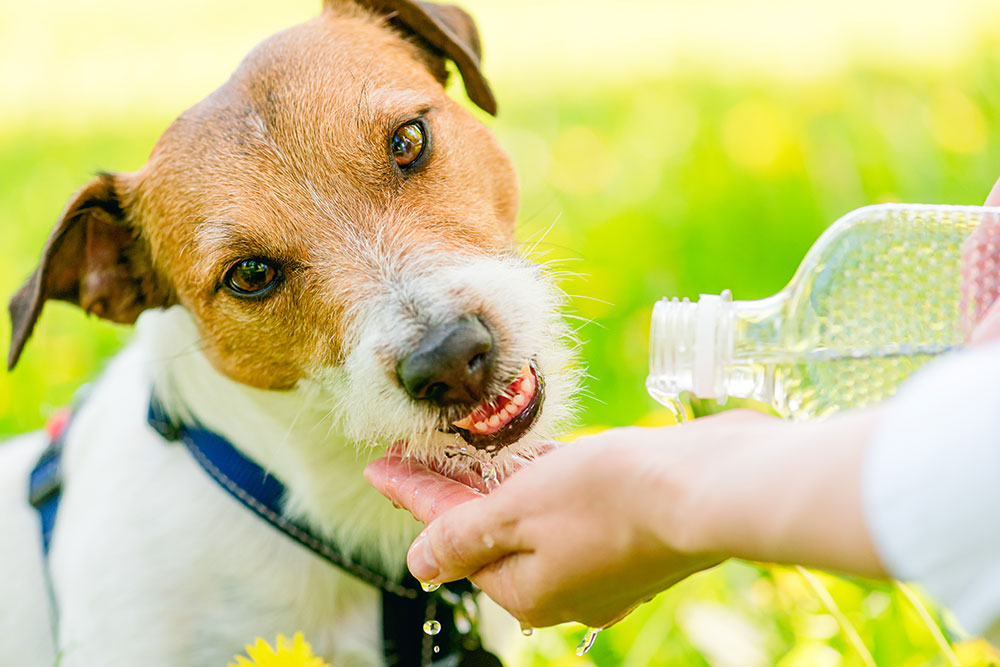
Cooling needs to begin at home, before the engine is even running for the drive in. After a pet’s internal temperature pushes past 105, the body quickly begins experiencing kidney injury, clotting failure, and brain swelling, so a car trip without active cooling can decide whether they recover or crash. Wet the belly, groin, paw pads, and ear flaps with cool tap water, never ice, then keep a fan or rolled-down window blowing across the damp fur. If your pet is alert and swallowing normally, offer small sips of water along the way. One person drives, another cools, and a third calls ahead so we’re ready at the door.
Valley Center Veterinary Clinic sits in the San Diego County foothills, where summer temperatures stack the deck against an overheating pet. We manage emergency care for dogs and cats in-house, with bloodwork and imaging to check for organ stress right away, and we hold walk-in slots open for urgent cases. If you’re worried that your pet has overheated, start cooling, call us, and head in. After hours, head to the nearest veterinary ER.
Heatstroke Quick Facts
- Heatstroke is a true emergency, and cooling with cool tap water and airflow should start at home the moment you suspect it, never with ice.
- Early signs like heavy panting and restlessness can escalate fast to bright red or bluish gums, wobbliness, and collapse, so the sooner you act the better the outcome.
- A pet that seems to bounce back after cooling can still develop serious organ and clotting problems over the next one to three days, which is why veterinary monitoring matters even when they look fine.
- Most heat emergencies are preventable with smart timing, constant access to water and shade, and never leaving a pet in a parked car.
What Should You Do the Instant You Suspect Your Pet Is Overheating?
Move fast but stay calm, because the first few minutes matter most. Get your pet out of the sun, then start cool water and steady airflow over the paws, belly, and armpits while someone calls ahead. Never an ice bath and never a wet towel left draped on the body, since both trap heat.
Work through these steps:
- Get to shade or AC: Stop all activity and move your pet somewhere cooler right away.
- Wet the right spots: Pour or spray cool, not icy, water over the belly, groin, armpits, and paw pads where blood runs close to the surface.
- Add airflow: Point a fan at the damp fur, or crack the car windows, so evaporation can pull heat away.
- Offer small sips: If your pet is alert and swallowing normally, let them drink small amounts of cool water. Never force water into a groggy or collapsing pet.
- Do not overcool: Skip ice baths, ice packs, and towels left sitting on the body. Overcooling and trapped heat both backfire.
- Call and come in: Reach out for same-day emergency and urgent care during our regular hours so we can be ready the moment you arrive.
Cool on the way, not just before you leave. Even a pet who perks up needs to be seen, because the real danger can arrive hours later.
Reading the Signs: Is This Really Heatstroke?
Heatstroke moves along a spectrum, and catching it early changes everything. The earliest warning signs of heatstroke in pets are frantic panting, drooling, and restlessness, climbing toward bright red or bluish gums, wobbliness, and collapse as body temperature rises. Dogs especially will keep going long after they should stop, so it is up to us to read the signs for them.
Gum color is one of the quickest checks you can do at home. Healthy gums are bubblegum pink; gums that turn brick red, then pale, gray, or bluish signal that the body is in real trouble.
| Stage | What you might see |
| Mild (early) | Heavy, frantic panting, drooling, seeking shade, restlessness, warm to the touch |
| Moderate | Bright red gums, thick sticky saliva, glassy eyes, weakness, vomiting or diarrhea |
| Severe (emergency) | Wobbliness or collapse, pale or bluish gums, confusion, seizures, unresponsiveness |
If your pet is anywhere past that first column, start cooling and call us. The moderate and severe stages are not the time to wait and see.
What Happens When Your Pet Is Treated for Heatstroke at the Vet?
Heatstroke care runs on several fronts at once and does not end when the temperature drops. In the hospital, heatstroke treatment means controlled cooling, intravenous fluids to replace lost volume, and management of secondary complications. The first 24 hours carry the highest risk of death.
We monitor temperature closely so cooling stops at the right point, support blood pressure and organ function with fluids, and watch for the downstream problems that heat injury sets in motion. The hardest part to accept is how normal a pet can look afterward. A pet that perks up after cooling can still slide into delayed organ damage, with the kidneys, liver, heart, and gut all vulnerable in the 24 to 72 hours that follow. That is why we take even a “recovered” pet seriously.
One of the most dangerous downstream problems is disseminated intravascular coagulation, a breakdown in clotting that leaves a pet bleeding and clotting abnormally at once, which is exactly why monitoring continues even when a pet seems stable. Alongside it, we also watch for systemic inflammatory response syndrome (a body-wide inflammatory cascade) and dehydration, all reasons the follow-up window matters as much as the rescue.
This is where in-house diagnostics earn their keep. In-house bloodwork and ultrasound let us track kidney values, clotting, and organ stress in the hours after a heat event, so a problem gets caught while it is still treatable rather than after it has taken hold. If a case needs overnight critical care, we help arrange it, and the after-hours video triage we offer through VetTriage can help you decide, in real time, whether your pet needs to be seen right now even if we’re closed.
Why Do Some Pets Overheat So Quickly?
Pets cannot sweat their way cool the way people do. Dogs and cats shed heat mostly by panting, moving warm air across a wet tongue and airway, with only a little help from the sweat glands in their paw pads. On a humid or triple-digit afternoon in the foothills, panting simply cannot keep up, and body temperature starts to climb.
Some pets have a higher risk than others. Flat-faced dogs and cats, thick double coats, very young or senior animals, heart or airway disease, and extra body weight all shrink the margin before overheating tips into an emergency. A shorter airway means a flat-faced pet’s cooling system is compromised from the start, and carrying extra weight narrows an already thin margin even further. That is why a pug, a Persian, a senior Lab, and a fluffy husky each need a heat plan built around their own body, not a one-size-fits-all rule.
We discuss heat risks during our wellness and preventive care visits, where we check weight and body condition, health risk factors, and go over what sort of adventures you plan to take with your pet so we can prevent problems from ever occurring.
How Can You Prevent Heatstroke on an Ordinary Summer Day?
Most heat emergencies never have to happen, and the everyday habits that prevent them are simple. Day-to-day heat safety comes down to fresh water within reach at all times, cooling mats or damp towels, shaded rest breaks, and treating that first heavy panting as a signal to slow down, not push on.
Toss a collapsible bowl and a water bottle in the car, and plan for shade wherever you go. Timing is the other half of the equation. Most of preventing heatstroke during summer activity is timing, walking in the early morning or after sunset, easing off the intensity on hot days, and pressing a hand to the pavement first so you are not marching a dog across surfaces hot enough to blister paw pads. If the asphalt is too hot for the back of your hand after five seconds, it is too hot for paws.
The single most dangerous mistake, though, happens in parking lots. A parked car can climb past 100 degrees within minutes on a day that feels comfortable outside, and hot vehicles take pets’ lives every summer even when the windows are cracked. There is no safe version of leaving a pet in a car in warm weather, not for a quick errand, not with the windows down. If your pet was shut in a hot car, call our team right away for triage instructions before you wait to see how they do.
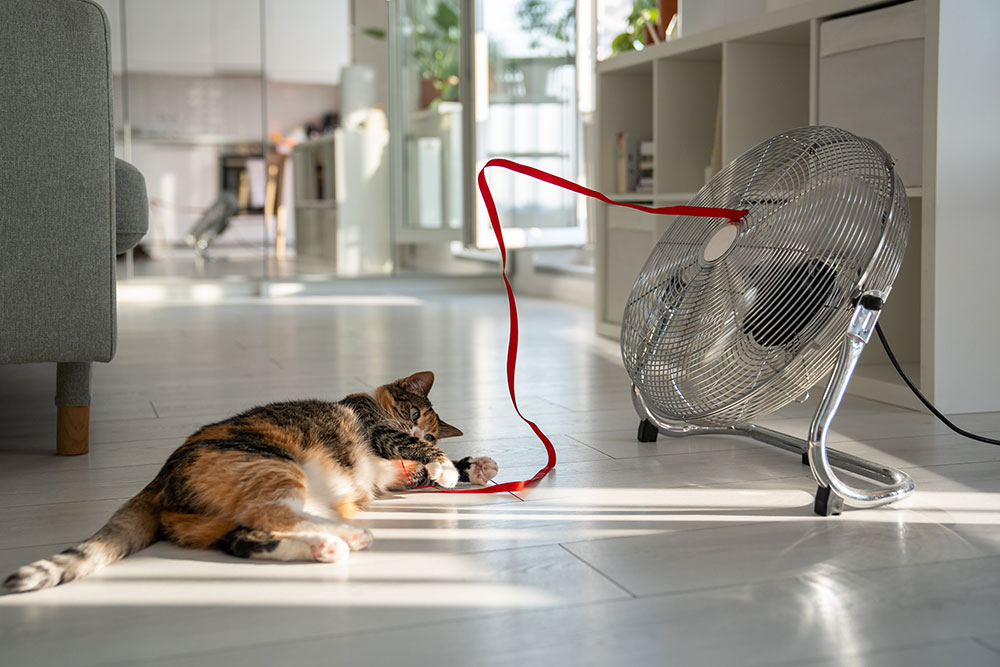
Don’t Forget the Cats Who Roam: Warm-Weather Care for Outdoor Felines
Cats who spend time outside need heat planning of their own, built around water and shade they can always reach. Outdoor cat safety in summer means several shaded water stations refreshed often, ventilated shelter out of direct sun, and a cool retreat a cat can reach on the hottest afternoons.
Placement matters as much as quantity: set bowls in spots your cat already uses, keep them out of direct sun, and choose heavy dishes that will not tip. A shaded catio offers fresh air without the open-sun exposure, and a shelter raised off the hot ground stays cooler through the afternoon. Because cats hide discomfort so well, routine feline wellness care with our Cat-Friendly Certified team helps us catch the heart, kidney, or weight issues that make a cat far less able to handle a hot day.
Making Indoor Days Fun When the Yard Is Off Limits
When the afternoon spikes, the best place for most pets is inside, and a little planning keeps them happy there. When the yard is too hot, indoor boredom busters keep a pet mentally busy without the running and roughhousing that push body temperature up.
Keep the air conditioning or fans running, leave access to cool tile or a shaded floor, and set up water in more than one room. Low-key enrichment is the goal, tiring the brain instead of the body. A few DIY enrichment toys built from a muffin tin, a towel, or a cardboard box turn snuffle games and puzzle feeding into low-effort stimulation that burns mental energy instead of body heat.
Heatstroke Questions Pet Families Ask Us Most
How fast can heatstroke actually happen?
Faster than most families expect. On a hot, humid afternoon, a dog running hard or shut in a warm space can climb into dangerous territory in as little as ten to fifteen minutes, and a closed car can get there even quicker. That speed is exactly why prevention and early recognition matter so much. If your pet has been active in the heat and starts panting frantically or acting off, treat it as urgent rather than waiting to see whether it passes.
My pet cooled down and seems totally fine now. Do I still need to come in?
A pet who has cooled down and seems fine still needs to be seen, even when that feels like overkill while they trot around normally. The problem is that heat injury to the kidneys, liver, gut, and clotting system can stay hidden for one to three days before it shows. A quick exam and bloodwork let us catch a brewing problem while it is still very treatable, rather than after your pet crashes at home. When in doubt, a phone call costs nothing and can save a lot.
Is it ever safe to leave my pet in the car if I crack the windows?
Leaving a pet in the car is never safe, even with the windows cracked. Cracked windows do almost nothing to slow how fast a parked car heats up, and interior temperatures can pass 100 degrees within minutes even on a mild day. There is no errand short enough to make it safe. The kindest move is to leave your pet at home.
A Cooler, Calmer Summer for You and Your Pet
Heatstroke is frightening, but it is also one of the most preventable emergencies we see. Start cooling the instant you suspect it, get your pet seen even when they seem to rebound, and lean on smart timing, water, shade, and cool indoor spaces to keep hot days uneventful. Thoughtful routines are what keep summer fun.
If you want a plan built around your pet’s breed, age, and habits, schedule a summer wellness visit with us and we will map it out together.



Leave A Comment