

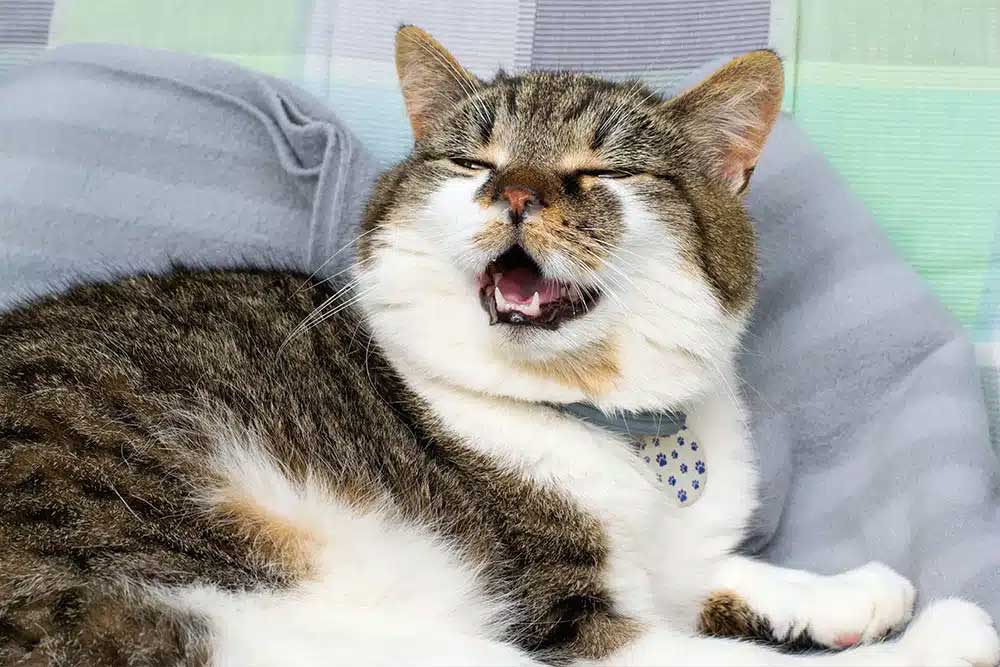
Trouble breathing is one of the few signs in a dog or cat where waiting until morning is almost always the wrong call. Pets, cats especially, hide respiratory illness until they run out of reserve, and the causes look alike from the outside: feline asthma, a flat-faced dog’s collapsing airway, fluid in the lungs from heart failure, an allergic reaction, laryngeal paralysis. If your pet is breathing with an open mouth, the gums look blue, gray, or white, or the neck is stretched out with the elbows held away from the chest, leave now and skip everything else. Never restrain a struggling cat to get a better look, because handling alone can worsen respiratory distress. If your pet seems comfortable and you are simply unsure, count the breaths for fifteen seconds while they rest and tell us the number when you call.
Valley Center Veterinary Clinic is AAHA accredited and handles most emergency and urgent care in house, with walk-ins always welcome when we have the staffing to take them. When your pet is working hard to breathe, the first job is getting them stable and settled, because handling or imaging an animal in real distress can make things worse. Once they can tolerate it, we use digital chest X-rays and lab work to see whether the problem sits in the airway, the lungs, or a heart that is backing fluid up into them, then treat what we find. If your pet’s breathing looks wrong today, call us on your way in, and when we are closed, go straight to the nearest 24-hour veterinary ER.
What Labored Breathing Is Telling You
- Breathing that looks like work, meaning a stretched neck or a belly that pumps with every breath, needs a same-day visit, and open-mouth breathing or gray gums means leaving now.
- Most dogs and cats take fewer than 30 breaths a minute while asleep, so a resting count you take at home gives us real information.
- Cats often show airway or heart disease as nothing more than faster, quieter breathing, with no cough at all.
- Nearly every cause here has a treatment, and the earlier we see your pet, the more we can do.
What Do Different Breathing Sounds Mean in Dogs and Cats?
The noise is a clue to where the trouble sits: a dry honk usually comes from the windpipe, wheezing from airways deep in the lungs, a harsh rasp on the way in from the throat or voice box, and snorting from the nose and soft palate.
One odd snort on a dusty trail is rarely anything. Patterns matter, so note when the sound happens, what makes it worse, and anything you can see, like blue-tinged gums, foam with a cough, or faster breathing during sleep.
When Does a Cough Need a Vet Visit?
Coughing that shows up once and quits by dinner is usually simple irritation. The ones we want to see stick around past 48 hours, wake a dog at night, or arrive with tiredness on a walk that used to be easy. The cough’s character narrows down the cause:
- Dry and honking a few days after boarding, daycare, or a group class: usually points to kennel cough, which spreads easily anywhere dogs share air.
- The same goose-honk in a Yorkie, Pomeranian, or Chihuahua: more often traces back to a collapsed trachea, where the cartilage rings of the windpipe flatten during breathing and the cough worsens with excitement or collar pressure. Weight control, a harness, and cough medication carry most small dogs, while severe cases may need an airway stent placed at a specialty hospital.
- Wet and gurgly: fluid sitting low in the airways, which can come from pneumonia or a heart that’s falling behind. Any senior dog with a new nighttime hack needs a cardiac workup.
- Sudden, violent coughing with real struggle: can mean something is lodged in the airway, and that one is a leave-now situation.
Puppies pick up contagious airway infections easily at class, boarding, and the groomer, so our puppy wellness visits include the vaccines that cover the most common ones.
What Do Sneezing and Nasal Discharge Point To?
Repeated sneezing with discharge means something is irritating the nasal passages: swelling, an infection, or an object where it doesn’t belong. Cats carry the heaviest load here, since upper respiratory infections move fast through litters, shelters, and multi-cat homes, and some cats flare for years afterward. Violent sneezing right after a walk through dry grass, especially with discharge from only one nostril, often means a barbed grass seed has lodged in the nasal passage. Foxtails are a summer and fall hazard across our inland valleys, and those seeds only travel one direction, deeper in.
Three findings move this up the priority list:
- A nosebleed, even a brief one
- Thick green or bloody discharge rather than clear and watery
- Swelling anywhere on the face
New kittens sneeze more often than not, and our kitten wellness visits cover the core vaccines and the early exams that catch a lingering infection before it settles in.
Wheezing, Stridor, and Snorting: Where Each One Comes From
Wheezing is a high-pitched whistle, the sound of air squeezing through a passage that has gotten too small. A cat crouched low with the neck stretched forward, wheezing or dry-hacking in a way that reads like a hairball, is showing the classic picture of feline asthma, where inflammation narrows the lower airways from the inside.
A severe allergic reaction does the same thing in minutes. Facial swelling, hives, vomiting, or collapse after a bee sting, a new medication, or a vaccine is anaphylaxis, and it needs care immediately. Never give a human combination allergy or cold product from the medicine cabinet, since many contain decongestants that are dangerous for dogs and cats. Neck wounds deserve their own look: a bite over the throat can tear the trachea, and a crackly, bubble-wrap feel to the skin along the neck is the tell.
Stridor is louder and rougher than a whistle, and you hear it as your pet draws air in. A harsh, raspy noise on the way in, especially in an older Labrador or other large-breed dog whose bark has changed, points toward laryngeal paralysis, where the cartilages of the voice box stop opening fully and a hot afternoon or a hard play session can tip a dog into a crisis quickly. Stertor is the lower, snoring-style rattle that flat-faced breeds make. Plenty of families are told that’s just how the breed sounds. It usually isn’t.
Is Reverse Sneezing Something to Worry About?
Reverse sneezing looks far worse than it is. Your dog freezes, extends their neck, and pulls air in with a loud honking snort for fifteen or twenty seconds, and small breeds do it most. An isolated episode is harmless. Bouts that repeat several times a day, run past a minute, or start in a dog who never did this before are worth an exam.
When is Snoring a Concern?
New or worsening snoring, gasping during sleep, or a dog who props their chin on something to breathe more easily can all signal brachycephalic obstructive airway syndrome, the combination of narrowed nostrils and an elongated soft palate that leaves short-nosed breeds working for every breath, with heat, excitement, and extra weight making it worse. Cats have their own version: a nasopharyngeal polyp, a benign growth behind the soft palate that turns a young cat into a snorer and sometimes comes with a head tilt or an ear problem on the same side. Removing it usually settles the noise for good.
If a sound sticks around, gets louder, or arrives with anything else on this page, reach out rather than waiting to see how the week goes.
Why Is My Pet Breathing Fast While Resting?
A resting rate above 30 breaths a minute usually means the lungs, the chest, or the heart is under pressure, often well before anything else looks wrong, and it’s one of the most useful things a family can catch at home.
Counting takes fifteen seconds:
- Watch the chest rise and fall while your pet sleeps, counting each rise for a quarter of a minute.
- Multiply by four to get breaths per minute.
- Repeat on a few calm evenings to learn the baseline, because a jump from 20 to 36 matters even though 36 doesn’t sound dramatic.
How Does Heart Disease Cause Fast Breathing?
When the heart can no longer keep up, fluid backs up into and around the lungs, and congestive heart failure looks different by species: dogs tend to cough at night and tire early on walks, while cats simply breathe faster and disappear under the bed.
For any pet already carrying a murmur or a cardiac diagnosis, that sleeping count becomes a monitoring tool. A steady climb over several days is often the first sign that medication needs adjusting.
Can Cancer Cause Breathing Trouble?
Rapid, shallow breathing in an older pet who suddenly refuses to lie down can be the first visible sign of cancer, whether the problem is spread into lung tissue, fluid collecting in the chest cavity, or a mass pressing against the airway.
Pressure inside the chest gets worse lying flat, so a dog will sit up through the night and a cat will perch upright with their elbows pushed out. Fluid has other sources too, like chylothorax, where lymphatic fluid pools around the lungs and usually has to be drained before the chest films can be read clearly.
What Happens to Breathing After an Accident?
Trauma hides. A dog clipped by a car or a cat who fell from a roofline can look untouched on the outside while blood collects in the chest cavity, and hemothorax frequently declares itself hours after the accident rather than at the moment it happens. Bruised lungs, cracked ribs, a diaphragmatic hernia, and a pneumothorax, which is air leaking into the space around the lungs, all steal the room those lungs need to expand.
Any pet hit, dropped, stepped on, or grabbed by a bigger dog needs a chest exam and imaging even when the skin looks fine, then a quiet stretch of close watching. Some injuries need surgical repair, and patients who need continuous overnight monitoring are transferred to a nearby emergency hospital.
Which Breathing Signs Mean Go Now?
Open-mouth breathing in a cat, blue or gray gums, sudden collapse, and breathing that visibly pulls at the belly and elbows are all respiratory distress, and every one of them means today, not tomorrow morning. Call while someone else drives, so we know you’re on the way.
A few things help on the drive:
- Tip the carrier on end and lower a panicking cat in rather than pushing them through the door, or skip the carrier and bring the whole bed.
- Run the air conditioning on the drive, since heat makes every kind of breathing trouble worse.
- Skip the medicine cabinet. Human cough syrups, antihistamines, and pain relievers all cause more trouble here.
- Leave a lodged object alone rather than fishing in the throat, since that tends to push it deeper.
Our team handles urgent and emergency care during our open hours, and walk-ins are welcome for emergencies whenever staffing allows.
One tier below a true emergency, these still need attention the same day:
| Sign | What it can point to | What to do |
|---|---|---|
| A cough past 48 hours with fatigue or fever | Pneumonia, a contagious airway infection, heart disease | Same-day exam |
| Thick green or bloody nasal discharge, or a nosebleed | Infection, a lodged plant seed, a clotting problem, a mass | Same-day exam |
| Gurgling breaths or foam at the mouth | Fluid sitting in the airways | Come in now |
| Restlessness, pacing, or refusing to lie down | Pressure or pain inside the chest | Come in now |
| Refusing food alongside any breathing change | A cat running low on reserve | Same-day exam |
| A resting rate that stays above 30 to 40 breaths a minute | Heart or lung disease | Same-day exam, sooner if it keeps climbing |
How Do We Figure Out What’s Behind It?
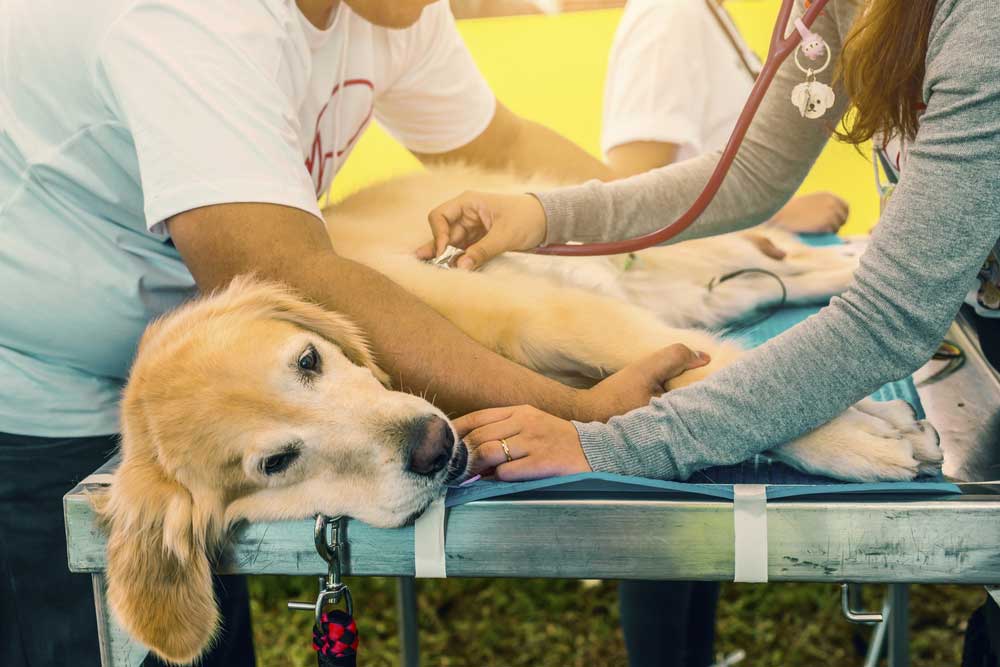
Stabilizing comes before answers, since the exam itself can push a struggling pet further. Once breathing steadies, the workup moves in order, starting with hands and a stethoscope and moving to our in-house diagnostics, and we tell you what we’re seeing as we go instead of leaving you to wait for a verdict at the end.
| Step | What it tells us |
|---|---|
| First look | How hard your pet is working to breathe, gum color, and heart rate, which sets the order of everything else |
| Hands-on exam | Lung and heart sounds, a gentle squeeze of the windpipe, and a look at the mouth and throat |
| Bloodwork | Infection, anemia, organ function, and clues that the cause sits outside the lungs |
| Chest X-rays | Fluid, masses, heart size, lung patterns, and rib fractures, the highest-yield test for a coughing or fast-breathing pet |
| Ultrasound | How well the heart is pumping and where fluid has collected around the lungs |
| Advanced imaging or scoping | A detailed look inside the airway for cases that stay unexplained |
Bloodwork during a breathing workup almost always includes heartworm screening, because adult worms living in the pulmonary arteries produce the same coughing and exercise intolerance as primary lung disease, and cases turn up across Southern California every year.
How Are Breathing Problems Treated?
Treatment follows the cause, so the plan for an asthmatic cat looks nothing like the plan for a dog with fluid on the chest.
- Medications: anti-inflammatories to calm swollen airways, bronchodilators to open them, and antibiotics to clear a bacterial pneumonia. Many asthmatic cats do beautifully on an inhaled steroid given through a small chamber and mask, which keeps the drug in the lungs instead of the whole body.
- Trigger control: dust-free litter, no scented sprays or candles near the box, no smoke indoors, and a decent air filter take real pressure off a reactive airway.
- Procedures: narrowed nostrils and a long soft palate can be surgically opened up, objects lodged in the nose or airway have to come out, and fluid around the lungs can be drained with a needle for fast relief.
- Hospital care: oxygen, injectable medication, and rest in a quiet space until the effort of breathing comes down. Pets who need continuous monitoring through the night go to a 24-hour facility.
Several causes on this list never get started when core vaccines and year-round parasite prevention stay current, which is most of what preventive care buys you. Our personalized wellness plans shape that schedule around your pet’s age, species, and time spent around other animals. Because a breathing workup can move quickly from one test to the next, we go over upfront pricing before we begin.
Questions We Hear About Noisy and Labored Breathing
Is my flat-faced dog’s snoring just part of the breed?
Snoring is common in Bulldogs, Frenchies, Pugs, Boston Terriers, and Persians, but common isn’t the same as fine. Dogs who sleep restlessly, gag while eating, or wilt in mild heat are working harder for air than they should be, and many do far better after surgery. The younger they are when that happens, the bigger the payoff.
Do cats pant like dogs after playing?
Not really. A cat may breathe hard for a minute or two after a wild session with a wand toy or a stressful car ride, then settle right back down. Panting that runs longer, or open-mouth breathing with no trigger at all, is abnormal in a cat and is one of the signs we take most seriously. Cats are experts at compensating, so by the time you notice, they’ve often been struggling quietly for a while.
What if breathing changes at night or on a Sunday?
We’re open Monday through Saturday, and when we’re closed, the safest move for a pet in real distress is the nearest 24-hour emergency hospital. For the gray-area moments, our after-hours video triage connects you with someone who can help you decide. Trust what you’re seeing, because breathing trouble doesn’t wait for opening hours.
Breathing Trouble Is Worth the Call, Every Time
Respiratory changes run the whole range, from a harmless snort to a true crisis, and the difference is rarely obvious from across the living room. Nobody at Valley Center Veterinary Clinic will think you overreacted for bringing in a pet who turns out to be fine. If breathing looks wrong today, call us, and if we’re closed, head to the nearest 24-hour veterinary ER. If it can wait for a calmer morning, book an evaluation and we’ll sort out what’s behind the noise together.



Leave A Comment