

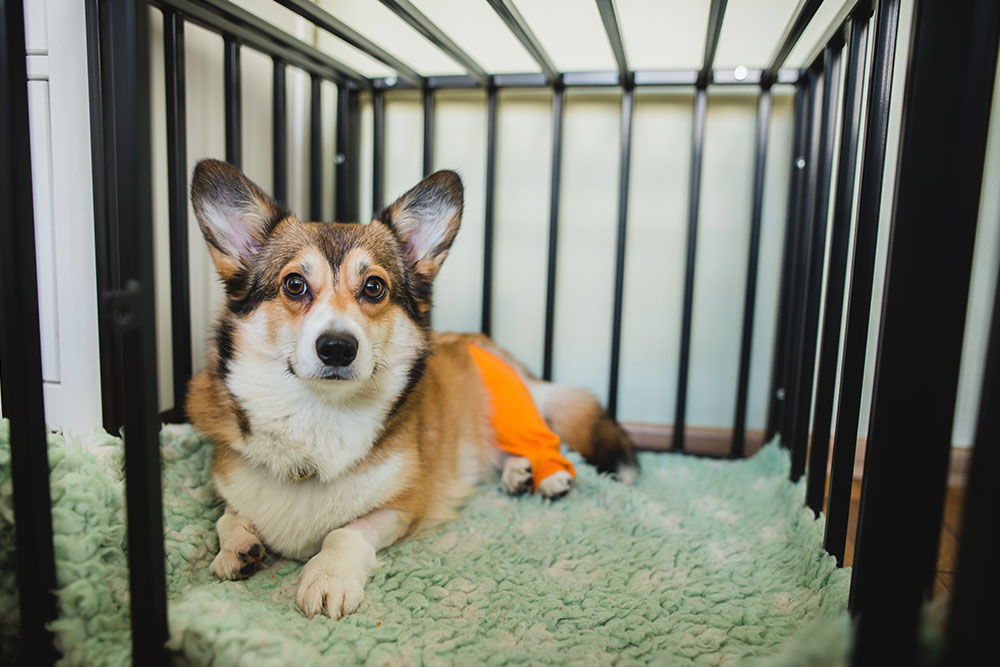
Mobility aids like carts, harnesses, and traction aids are the right choice for many dogs, and they are not last-resort measures. They are practical tools that keep dogs moving, confident, and physically engaged while the condition causing the problem is managed. The right choice depends on what the mobility loss actually looks like: harnesses work best for dogs with some remaining function who need help with transitions and uneven terrain, rear-wheeled carts step in when function is more significantly reduced, and traction aids address the dog who can walk but slides because the floor feels unsafe. Across all three categories, the device is more effective when the underlying cause has been identified, because arthritis, intervertebral disc disease, degenerative myelopathy, and post-surgical recovery each shape the recommendation differently.
Valley Center Veterinary Clinic is AAHA accredited, and that standard shapes how we approach a case like this: thoroughly and collaboratively. Our diagnostics include digital radiography, in-house bloodwork, and abdominal ultrasound, giving us the imaging and lab data to understand what is driving your dog’s mobility change before we make any recommendations. Seniors especially benefit from mobility aids, and there are more options available than you’d think. If you are trying to figure out whether a cart, a harness, or something else entirely makes sense for your dog, give us a call and we will work through it with you.
Mobility Support at a Glance
- Aids keep pets moving: they are tools, not concessions to decline.
- Diagnosis shapes the device: arthritis, IVDD, degenerative myelopathy, and post-surgical recovery each call for different solutions.
- Devices work within a plan: alongside pain control, weight management, and rehabilitation.
- Early intervention pays off: it preserves muscle and confidence, which translates to better outcomes later.
What Signs Mean a Pet Needs Mobility Help?
Mobility changes usually accumulate rather than appearing overnight, so the early warning signs are worth knowing:
- Morning stiffness that loosens up with movement
- Reluctance to use stairs or jump on furniture
- Slipping on hardwood, tile, or laminate floors
- Gait changes like shorter strides, slight bunny-hopping, or swaying
- Scuffed nails from dragging a paw
- A slower pace on walks
- Behavioral shifts like withdrawing, less play, or irritability when touched
- Difficulty rising from rest
- Trembling in the hindquarters after activity
The most common underlying cause is osteoarthritis, which affects most senior dogs to some degree, but neurological conditions, post-surgical recovery, and structural orthopedic disease all produce similar patterns. Sudden severe changes like acute paralysis, sudden weakness, or dragging both rear legs warrant same-day evaluation, and our emergency availability covers walk-in urgent care while we are open.
Which Spinal Conditions Require Mobility Support?
Several spinal conditions drive the need for mobility aids, and the device choice depends heavily on which one is involved.
IVDD and FCE
Intervertebral disc disease involves disc material pressing on the spinal cord, with outcomes ranging from mild back pain to complete paralysis depending on location and severity, and breeds at highest risk include Dachshunds, French Bulldogs, Beagles, and Corgis. Some cases respond to medical management while others require surgery and rehabilitation.
Fibrocartilaginous embolism, or FCE, is a sudden spinal event from a piece of disc material entering the spinal blood supply, and unlike IVDD it is not progressive, so most dogs recover substantial function with rehabilitation.
Rear harnesses are essential during recovery from either condition, and carts provide independence for dogs with permanent rear-leg paralysis.
Degenerative Myelopathy
Degenerative myelopathy is a progressive spinal cord disease affecting breeds like German Shepherds, Boxers, and Corgis, with onset in middle age or later, and it is painless but causes gradual loss of coordination, then weakness, then paralysis, usually starting in the rear. Because it progresses predictably, mobility support advances with it:
- Early stages: traction aids on slick floors, non-slip booties, and rear-zone awareness exercises
- Middle stages: a rear support harness for stairs, transitions, and difficult terrain
- Later stages: a mobility cart that supports the rear, with quality of life conversations as front-leg involvement develops
Anticipating these transitions rather than reacting to them lets you stay ahead of decline.
How Do Joint Conditions Factor In?
Hip dysplasia is abnormal hip joint development causing instability and secondary arthritis, most common in medium and large breeds, with signs like a bunny-hopping gait, reluctance to use stairs, swaying hindquarters, and difficulty rising. Cruciate ligament injuries, elbow dysplasia, and a number of other orthopedic conditions can cause similar life-long mobility problems. Support harnesses reduce strain during transitions and walking, combined with:
- Weight management, since each pound of excess weight increases hip joint load disproportionately.
- Pain medications like NSAIDs, Librela, and gabapentin as appropriate.
- Joint supplements like glucosamine, chondroitin, and omega-3s, available through our pharmacy as dog hip and joint supplements and omegas for dogs.
- Physical therapy with targeted exercises that preserve and build muscle around compromised joints.
- Cold laser therapy to reduce inflammation and support healing.
- Surgery in advanced cases, like total hip replacement or femoral head ostectomy.
The earlier this combination starts, the more function is preserved.
What Is Life Like After Amputation?
Osteosarcoma is one of the most common reasons for limb amputation in dogs and the disease most often behind painful lameness in giant breeds, and amputation surgery combined with chemotherapy removes the pain source and significantly extends quality of life, with most dogs adapting remarkably well within weeks. Congenital defects and trauma also may require amputation. Practical considerations:
- Front-leg amputees carry more weight on the remaining front leg, so they typically need more harness support, especially for stairs and inclines.
- Rear-leg amputees adapt more quickly because most weight already sits on the front limbs.
- Older or overweight dogs may need more time and assistance during adaptation.
- The Tripawds community provides peer support and practical tips from families who have been through it.
Our surgery services include amputation when indicated, with thorough pre-op planning, anesthetic monitoring, and post-op pain management. We’ll go over what sort of support your pet may need based on their individual risk factors.
What Types of Mobility Devices Are Available?
The three main categories each suit a different degree of mobility loss, summarized here before the detail below:
| Device | Best for | Examples |
| Support harness | Dogs with some function needing help with transitions and stairs | Rear, front, and full-body lift harnesses |
| Mobility cart | Significant rear weakness or paralysis | Rear-, front-, and four-wheel carts |
| Traction aids | Dogs who can walk but slip on smooth floors | Toe grips, paw wax, booties, rugs |
Support Harnesses
Three main configurations match specific situations:
- Rear-end harnesses, with a handle over the hindquarters to lift and support rear function, and our pharmacy carries a Lifting Harness for Hind Legs.
- Front-end harnesses, the same concept for the front legs, valuable for front-leg amputees and dogs with cervical issues, and we carry a Lifting Harness for Front Legs.
- Full-body lift harness, with handles on both ends for dogs needing substantial support, where Help ‘Em Up makes well-regarded options.
Proper fit is essential, since a poorly fitted harness shifts during use and can cause chafing, and most dogs adapt within a week with positive introduction.
Mobility Carts
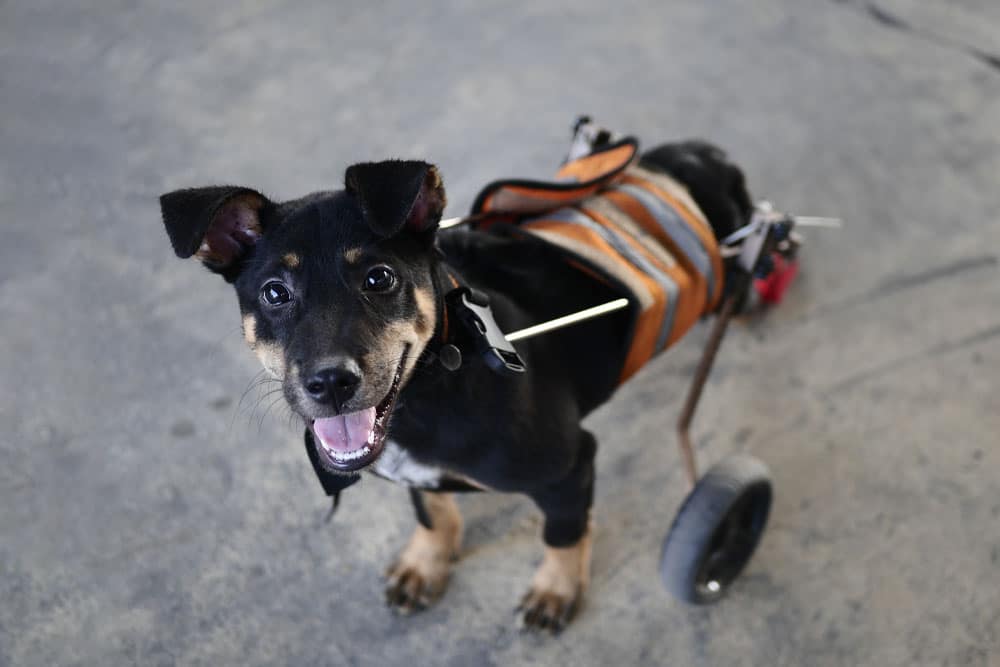
Wheeled carts support weak or paralyzed limbs and restore a dog’s ability to move and explore, and mobility carts come in rear-wheel, front-wheel, and four-wheel configurations. Cart fitting is critical, with precise measurements of chest girth, leg length, body length, and weight, and most manufacturers offer fitting support. A typical adaptation timeline runs brief 10-to-15-minute sessions in days 1 to 3, gradual increases through week 1, and genuine independence by weeks 2 to 4\. Carts are for activity, not housing, so dogs still need time out of the cart for rest and home life.
Traction Aids and Knuckling Solutions
For dogs who can walk but slip on smooth floors:
- Rubber toe grips, small bands over the nail that provide traction and that many dogs forget they are wearing.
- Paw wax, which adds tackiness without changing how the foot moves.
- Non-slip socks, full-foot coverage that some dogs tolerate well.
- Traction booties, full protection plus traction to protect paws that are scuffing or need more traction.
- Area rugs and runners on main travel paths, often the highest-impact home modification.
- No-Knucking training socks, which helps retrain proper foot placement during recovery from neurologic conditions or for long-term use in dogs that have lost the ability to move their feet normally.
- Resistance bands, that attach to a harness and can help improve rear leg strength and act as an aid in leg placement
Our team is happy to go over what options are available for your pet and lifestyle.
What Home Modifications Support Mobility?
Practical home changes produce meaningful improvement:
- Traction along main travel paths, with runners on slick hallways and mats at food bowls and resting spots.
- Ramps for stairs and furniture, for lower-impact entry to the bed, couch, or car.
- Raised food and water bowls to reduce neck and spine strain.
- Improved resting areas, like orthopedic beds and warm, draft-free low-entry spots.
- Blocked unsafe areas, with baby gates at staircases and blocked slippery floors when unsupervised.
- Litter box adjustments for cats, with low-entry boxes in accessible locations.
Make changes gradually rather than all at once, since pets adjust more easily when their environment shifts one piece at a time.
How Do Devices Fit Into a Complete Care Plan?
Devices work best as part of a comprehensive mobility plan that addresses the underlying condition, not as the entire treatment:
- Pain control with NSAIDs, monoclonal antibody therapies like Librela for dogs and Solensia for cats, gabapentin, and amantadine.
- Weight management, the highest-impact modifiable factor for most mobility issues.
- Veterinary physical rehabilitation with targeted exercises, manual therapy, and hydrotherapy
- Nutrition and supplementation with omega-3s, joint supplements, and prescription diets in some cases.
- Cold laser therapy to reduce inflammation and support healing, available at our practice.
- Device support with harnesses, carts, and traction aids appropriate to the situation.
Our wellness and preventive care visits include the assessment that pulls these layers together, with separate senior pet wellness packages for older pets where mobility often needs ongoing attention.
What Improvements Should You Expect?
Signs that a device is making a meaningful difference:
- Increased confidence moving around the house
- More engagement in daily routines, like greeting at the door and following you between rooms
- Reduced anxiety during transitions like getting up from rest or going down stairs
- Better sleep, which often reflects reduced background pain
- Fewer accidents, with less reluctance to reach the bathroom area in time
- Renewed interest in walks or exploration
Small wins represent real quality-of-life gains, and needs shift over time as conditions evolve, so regular check-ins let us adjust the plan, swap devices, and change medications based on what is working.
Frequently Asked Questions About Pet Mobility Aids
How Do I Know When It’s Time for a Cart vs a Harness?
If your dog can still walk with some assistance, a harness is the right starting point. If walking requires you to carry most of their weight or they cannot bear weight on the rear at all, a cart provides genuine independence. We can help you make the call based on what we see at the visit.
Will My Dog Adapt to a Mobility Device?
Most do, within days to weeks. Some dogs adapt almost instantly while others need a more gradual introduction with positive reinforcement, and patience with short positive sessions in the early days produces the best outcomes.
Can My Cat Use Mobility Aids?
They can, though feline mobility aids are less commonly used than canine ones. Carts exist for cats, but home modifications and traction aids often produce most of the benefit for arthritic or recovering cats, and litter box adjustments are especially impactful.
Are Mobility Aids Covered by Pet Insurance?
Coverage varies widely by policy, since some plans cover mobility devices as part of rehabilitation and others do not, so check your specific policy. Devices range from under 50 dollars for traction aids to 500 dollars or more for custom carts.
My Dog Has a Progressive Condition. How Often Will the Plan Change?
Plans evolve as the condition evolves. For degenerative myelopathy specifically, expect transitions roughly every 3 to 6 months on average, though individual variation is substantial, and regular rechecks let us anticipate the next stage rather than react to it.
Partnership in Supporting Pet Mobility
Mobility challenges do not have to limit a pet’s joy. The right combination of devices, home modifications, and medical care keeps most pets comfortable, active, and engaged for far longer than owners often expect when symptoms first appear, and early intervention preserves muscle, confidence, and quality of life.
If your dog is showing mobility changes and you want a thorough evaluation, request an appointment or contact us and our team will work through it with you.



Leave A Comment